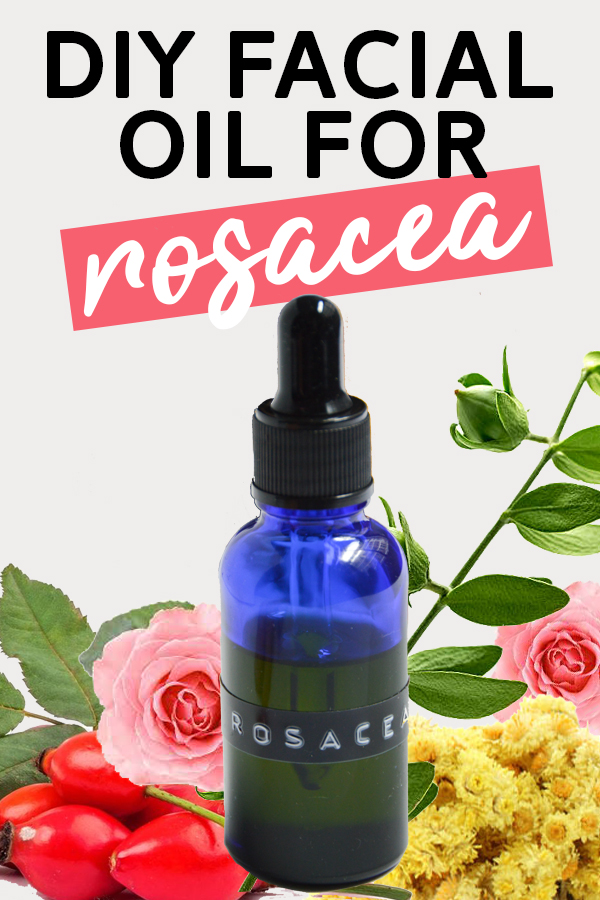
Facial Oil for Rosacea – DIY Essential Oil Blend

Facial Oil for Rosacea: DIY Essential Oil Blend - learn how to make a facial oil for rosacea that's best for YOUR skin. #rosacea #essentialoils #aromatherapy #skincare

In this post I’ll be sharing the facial oil blend that I’ve personally been using for my rosacea (with awesome results!), but then we’ll go beyond that. Everyone’s skin and body is different, so instead of just sharing my facial oil for rosacea, I’m going to also help you build your own that suits your skin best.

For more background info on rosacea, my experience with it (before & after pics), and how aromatherapy can help, check out this blog post: Essential Oils for Rosacea. And before we jump into things, it’s important to emphasize that I am a Certified Aromatherapist, not a doctor. I 100% stand behind aromatherapy as a complementary therapy for rosacea, however the information shared in this post should not replace advice from your doctor.

My Facial Oil for Rosacea

Links throughout this post are mostly to Plant Therapy, a brand I personally use and love. If you prefer shopping on Amazon (don’t we all), I’ve also included links to the oils there. Your local Whole Foods probably carries Aura Cacia, and that’s another brand I love and would recommend. For other brand suggestions, check out this post. Below links are affiliate, but I’m in no way sponsored by any essential oil brand.

The following recipe makes 1oz of facial oil at a 2% essential oil dilution.

Blend Ingredients

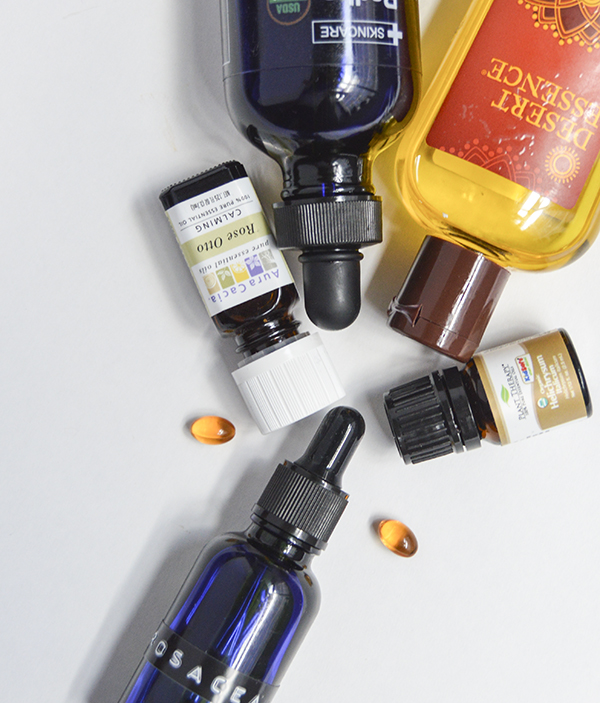
  • 1/2 oz (1 tbsp) Jojoba oil
  • 1/2 oz (1 tbsp) Rosehip seed oil
  • 8 drops Helichrysum
  • 4 drops Rose otto
  • 400 IU Vitamin E

Direction for Blending & Using

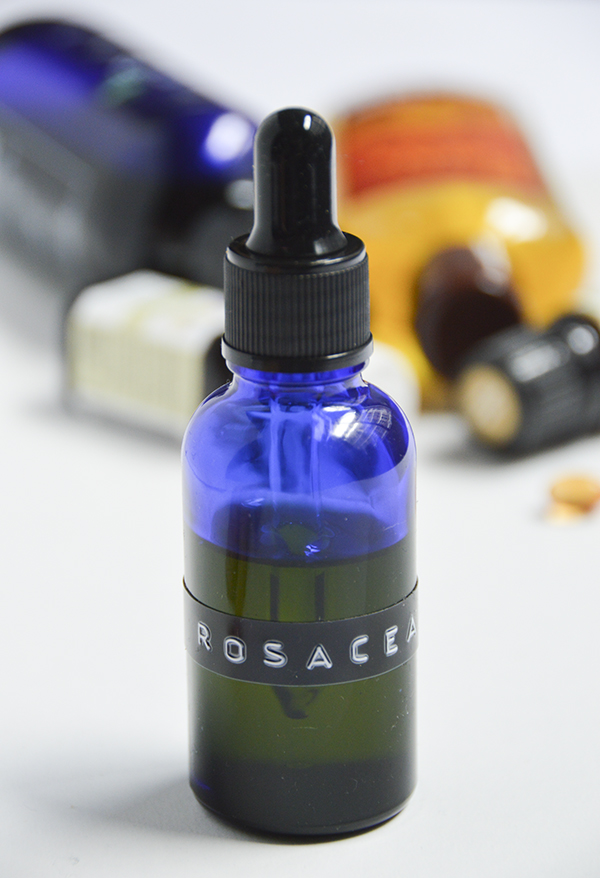
To assemble: Add your carriers and antioxidant (Vitamin E) then the essential oils, and shake to combine. Adding an antioxidant like Vitamin E to facial oil blends will prolong the shelf life—also Vitamin E is great for skin. You can buy a bottle of Vitamin E gels where ever you buy supplements and simply rip open the gel casing and squeeze it out into your blend.

Usage: Facial oils should be applied to moist skin after cleansing and toning, by putting a couple drops on fingertips and gently smoothing/pressing on in an upward motion. I apply twice a day, in the morning and before bed. If you also use a moisturizer, put the facial oil on before the moisturizer. I personally just use more carrier oil as a moisturizer after applying the facial oil blend (rosehip seed oil usually).

The “Why” behind My Blend
Facial Oil for Rosacea: DIY Essential Oil Blend - learn how to make a facial oil for rosacea that's best for YOUR skin. #rosacea #essentialoils #aromatherapy #skincare

I’ve tried a couple different combos of essential oils in finding one I liked best. At first I was using German chamomile and Helichrysm. German chamomile is anti-inflammatory, one of the gentlest essential oils out there, and is just wonderful for any sort of sensitive skin issues. But I hate the smell. It’s not even that bad (you might like it and want to include it), but just something about it doesn’t sit well with me personally. Yes, you could say the benefits outweigh the smell, but your visceral reaction to an essential oil should not be ignored.

This may sound hippy-dippy, but energy, thoughts, emotion, mind, body, spirit—it’s all connected. You don’t want negativity surrounding the scent of an essential oil blend. Aromatherapy is the science of what essential oils work for a condition based on their chemical constituents, and then the art of selecting oils and amounts that combine synergistically into a pleasant and effective blend.

I swapped German chamomile for Rose otto, which is an expensive essential oil, but indicated for rosacea and just great for all skin types in general. The result was a much improved scent (for me), while still being effective.

Jojoba oil is good for inflammation and closely resembles the sebum our skin naturally produces. I knew I wanted to use that as a carrier oil. I’ve also been using rosehip seed oil on my skin for close to a decade to prevent premature aging (see this post for more: Rosehip Seed Oil: Benefits & Uses). While it’s not specifically indicated in the treatment of rosacea (I used it before the onset of my rosacea and during the worst of it, so clearly didn’t make a difference for me), I know it works well for my skin in other ways. For that reason, I decided on a 50/50 split jojoba and rosehip.

Customizing Your Own Facial Oil for Rosacea
Facial Oil for Rosacea: DIY Essential Oil Blend - learn how to make a facial oil for rosacea that's best for YOUR skin. #rosacea #essentialoils #aromatherapy #skincare

Some of the information in this section is also found in the general Essential Oils for Rosacea blog post.

With rosacea and any type of sensitive, inflamed skin, it’s best to avoid complex blends of essential oils. There may be several oils and carriers that sound perfect for you, but try to keep your blends simple. 1-2 carriers, 2-3 essential oils max. Start there and then if you want to try incorporating others into the blend, you can. With sensitive, irritated skin, It’s also always smart to do a skin patch test of the essential oils you plan to use to ensure you don’t have an allergy or sensitization to them that could worsen your skin condition. More on essential oil safety and skin patch tests in this post.

Essential Oil Options for Your Blend

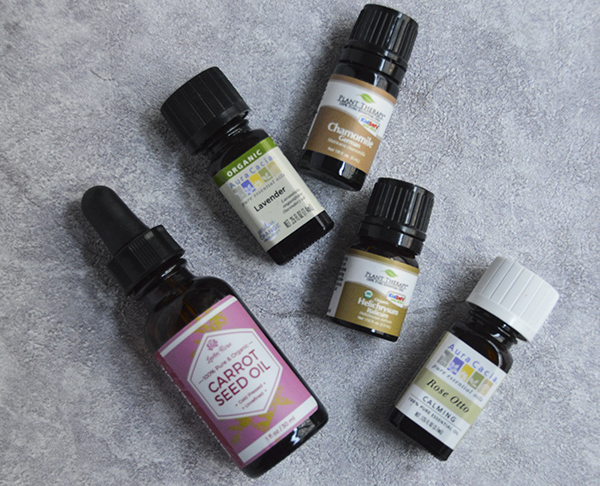
In general, what these oils all have in common is that they’re gentle (great for not just rosacea but any sensitive skin!) and have anti-inflammatory properties. If you’re going to make a blend for yourself, I’d highly recommend incorporating one (or more) of the first three listed below (German chamomile, Helichrysum and/or Rose otto).

  • German chamomile (via Amazon) – One of the gentlest essential oils, making it great for treating sensitive skin issues. Anti-inflammatory, anti-allergenic and supports calmness.
  • Helichrysum (via Amazon) – Great for sensitive skin and inflammation, broken veins, couperose skin and old scars.
  • Rose otto (via Amazon) – Ideal for skin care, especially sensitive, mature and/or dry skin. Indicated for broken capillaries and poor circulation. This essential oil is pricey. I love it, but if you’re trying to keep the cost of your blend down, I’d use Helichrysum and/or German chamomile instead.
  • Lavender (via Amazon) – Another gentle oil that’s safe for almost all skin types. Good for skin inflammations, and calming for both skin and emotions. You can read more about Lavender essential oil in the linked blog post.
  • Neroli (via Amazon) – Tones the skin and is good for sensitive skin; also a circulatory tonic.
  • Sandalwood (via Amazon) – Relieves itching and inflammation, can be helpful in calming a rosacea flare-up.
  • Carrot seed (via Amazon) – Good for irritated skin. A depurative, which are used in the treatment of chronic inflammatory diseases. Carrot seed is an essential oil but is most often used as part of a carrier. Don’t use undiluted on the skin.
  • Jasmine (via Amazon) – Good for dry and/or sensitive skin. Jasmine is also used to support anxiety, so if your rosacea is triggered by anxiety it can be helpful.

With papulopustular rosacea, sufferers have a higher density of Demodex folliculorummites on their faces. These bacterium have the potential to stimulate the inflammatory rosacea response (source: Lacey). If you have this particular type of rosacea, essential oils with antibacterial and antimicrobial properties (as well as anti-inflammatory) are going to be most useful in treatment. From the above list, Lavender and Neroli would be good options (especially Lavender).

Carrier Oil Options for Your Blend

Carrier oils are the vegetable oils in which you dilute essential oils before applying to your skin. Rosehip seed oil isn’t listed here because it’s not specifically indicated for rosacea, but as I mentioned already, I love it for preventing premature aging and use it in my blend.

  • Jojoba (via Amazon) – Good for inflammation and all skin types. Jojoba oil is actually a liquid wax and is similar to the sebum our own body produces, making it ideal for skin care.
  • Tamanu (via Amazon) – Has anti-inflammatory and anti-oxidant properties; used in healing damaged skin and rashes.
  • Apricot kernel (via Amazon) – A fine, light seed oil that helps with healing and rejuvenating skin cells. Used frequently in facial preparations and is great for delicate, inflamed and/or sensitive skin.
  • Borage seed (via Amazon) – High in GLA (gamma linoleic acid), which is an anti-inflammatory and important for healthy skin. Recommended to used in 10% dilution.
  • Hazelnut (via Amazon) – Useful in facial oil blends because it’s easily absorbed and good for all skin types. It’s rich in vitamins, minerals and protein.
  • Avocado (via Amazon) – Great for aging, dry and/or undernourished skin. It’s rich and heavy, and good for all skin types. Short shelf life so store in the refrigerator and buy it in small quantities.
  • Safflower (via Amazon) – Good for all skin types and helps soften the skin. Has a light-medium consistency and is pretty odorless if you’re sensitive to scents.
  • Sesame oil (via Amazon) – A lightweight oil rich in Vitamin E, minerals, protein and lecithin that can speed healing and prevent drying. Not to be confused with the toasted sesame oil you find in the grocery store.

Building Your Facial Oil: Best Essential Oils by Skin Type

The most successful facial oil will take into account more than just your rosacea—the more personalized for your skin type, the better! Cross-reference the above list of essential oils for rosacea with the following lists. To make things easy, the ones that have been bolded below also appear on the suggest list for rosacea.

Including an oil that appears on both in your facial oil is encouraged. But you could also choose one from the rosacea list and one from your skin-type list.

Normal Skin

  • Bergamot
  • Cedarwood
  • Geranium
  • Lavender
  • Neroli
  • Roman chamomile
  • Rose
  • Rosewood

Dry Skin

  • Cedarwood
  • Geranium
  • Jasmine
  • Lavender
  • Orange
  • Rose
  • Rosewood
  • Ylang-ylang

Oily Skin

  • Bergamot
  • Camphor
  • Cedarwood
  • Cypress
  • Frankincense
  • Geranium
  • Juniper
  • Lavender
  • Lemon
  • Rose
  • Sandalwood
  • Grapefruit

Mature/Aging Skin

  • Cypress
  • Fennel
  • Frankincense
  • Lavender
  • Myrrh
  • Neroli
  • Orange
  • Patchouli
  • Rose
  • Elemi
  • Vetiver

Assembling Your Custom Facial Oil Blend for Rosacea

Once you’ve found your oils and carriers, here’s the general blend amounts to use:

  • 1 oz (= 2 tbsp) carrier oil(s)
  • 12 drops essential oil(s)
  • 400 IU Vitamin E

This will make 1 oz of facial oil at a 2% dilution. For really sensitive skin, you may want to reduce the number of drops of essential oils further so it’s more like a 1-1.5% dilution. However, the oils recommended for rosacea are gentle and specifically suited to sensitive skin, so I wouldn’t anticipate problems at 2%.

In addition to this facial oil, I use a floral water toner for sensitive skin and have a facial mist spray for rosacea flare-ups. In getting rosacea under control, there are also lifestyle, dietary and other changes that may need to be made in order to see real change. Read more about those here.

Leave any questions below or slide into my DMs on Instagram if you’d prefer they not be publicly visible (@nicolepearce).

xo Nicole

The statements and blends referenced in this post have not been evaluated by the Food and Drug Administration. Products and/or information are not intended to diagnose, treat, cure or prevent any disease. If you are pregnant, nursing, have a medical condition or are taking any medication, consult with your physician before using any essential oil or blend.

I’m a Certified Holistic Aromatherapist through the Institute of Integrative Aromatherapy and only share blends with you that I’ve personally used and from which I’ve benefited. I stand behind them 100%! That being said, essential oil blends are most effective when made with individual needs, goals and personality in mind.

Source Cited

Lacey, N., Delaney, S., Kavanagh, K., Powell, F.C., Mite-related bacterial antigens stimulate inflammatory cells in rosacea, British Journal of Dermatology, 2007 (https://doi.org/10.1111/j.1365-2133.2007.08028.x). Jan 25, 2018.
Essential Oils for Rosacea — My Story & What’s Helped

Essential Oils for Rosacea: My Experience & What's Helped #aromatherapy #essentialoils #rosacea #skincare

I’m so excited to share this blog post series with you! Rosacea is something I was personally struggling with prior to beginning my aromatherapy certification course, so when it came time to do case studies as part of my graduation requirements, I knew I wanted to dive deep into the issue. Over the next few days, I’m going to share everything I’ve learned about aromatherapy and essential oils for rosacea with you. I’ll also share the exact blends I’ve been using and show you how to make your own at home.

My skin has improved a ton, which is why I’m so pumped to share this all with you. That being said, we’re all different and what works for me may not work for you. I’m a Certified Aromatherapist—not a dermatologist or a doctor—so while I 100% stand behind aromatherapy as a complementary therapy, the advice I share here shouldn’t replace that of a medical professional.

What Is Rosacea?

The following is taken from the rosacea case study and intervention guidelines from my aromatherapy course. I’ve edited it a little to be more conversational. Sources are sited at the bottom of this blog post.

Rosacea is a chronic inflammatory skin disease characterized by flushing, fibrosis, redness, broken capillaries and dryness. Skin affected by rosacea can be couperose with the additional presence of acne-like papules. “Couperose” is redness due to the presence of dilated red blood vessels, so you get the appearance of tiny red spider-like veins on the surface of the skin. This can be accompanied by an irritating, tight, tingling, burning feeling. Rosacea typically affects the cheeks and nose but can affect other areas of the face as well.

There are four major subtypes of rosacea:

  • Erythematotelangiectatic rosacea
  • Papulopustular rosacea
  • Phymatous rosacea
  • Ocular rosacea

Rosacea is primarily caused by poor elasticity in capillary walls. When body temperature increases or blood rushes to the face, capillary walls expand. If they aren’t sufficiently elastic, they won’t, however, properly contract again to their original shape or size. This results in distended capillary that hold blood cells and give the appearance of redness on the face. This skin condition is aggravated by digestive disorders, poor nutrition and nervous disorders (Battaglia).

Rosacea involves several different regulatory systems (immune, nervous, vascular) and often affects multiple family members, suggesting a genetic component as well. Rosacea is most prevalent among middle-aged women, with the onset occurring most often between ages 30-60 or after menopause. It’s common in people with delicate, thin skin where the weakening capillary walls to the blood vessels in the face become easily visible (Steinhoff).

Factors that can trigger or exacerbate rosacea symptoms:

  • Sun exposure
  • Extreme hot/cold weather or rapid change in temperature
  • Stress
  • Consumption of spicy foods
  • Intense exercise
  • Alcohol
  • Tobacco

My Experience with Rosacea

If you don’t care about my personal experience with rosacea and just want to find out more about helping your own situation, I totally understand and suggest you scroll passed this section. 😉

A couple years ago, I had what I thought was an allergic reaction to wine. My cheeks weren’t just flushed—they were bright red and felt tight, tingly and itchy. The next morning, they were better but I was left with tiny red marks that looked a bit like zits. I brushed off the incident, thinking I’d just stop drinking that brand of wine.

But then this redness issue started happening more frequently, and completely unrelated to drinking wine. If I did an intense workout, took a hot shower, or even was just experiencing anxiety, my face would flare up. And the redness wouldn’t go away. It almost looked like I had a breakout, with tiny splotches that looked like blemishes and others that looked like broken blood vessels. This got worse and more frequent over the year.

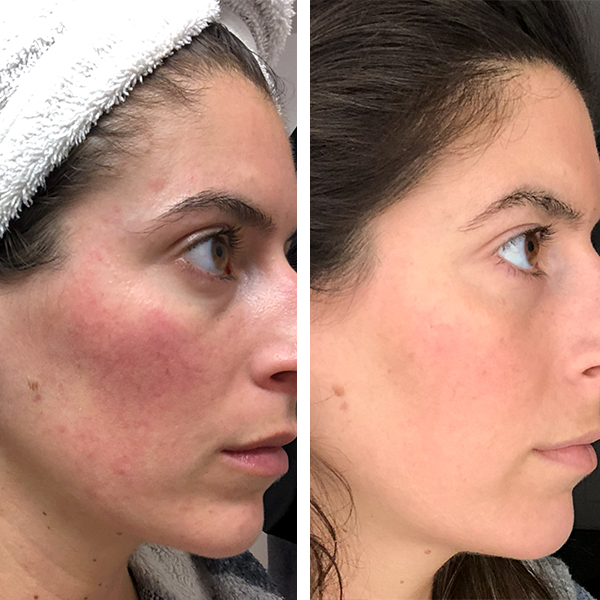
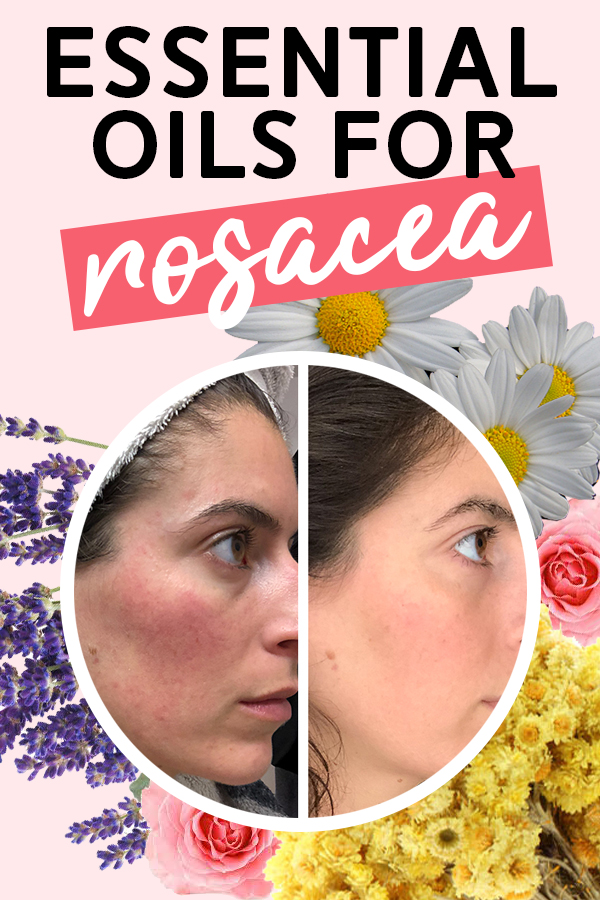
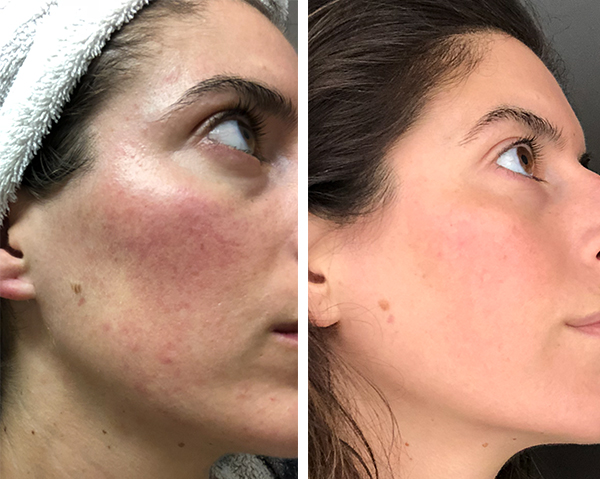
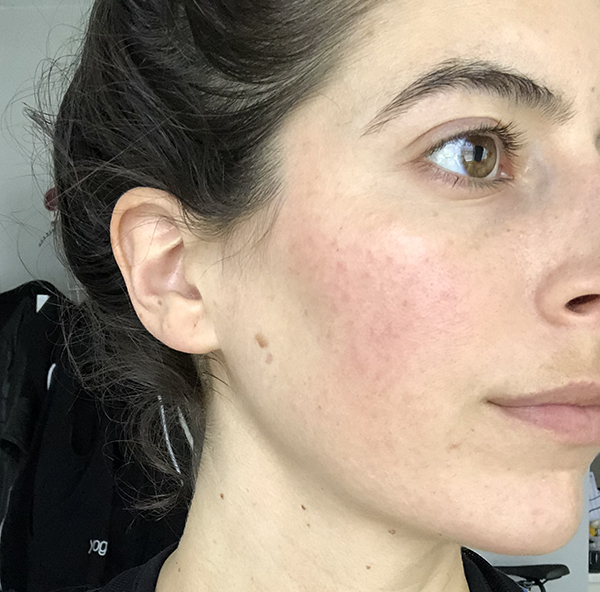
Even when I wasn’t having a flare-up, you could see the spots and small red blotches, almost like healing acne scars:

Essential Oils for Rosacea: My Experience & What's Helped #aromatherapy #essentialoils #rosacea #skincare

I’ve never had sensitive skin until now. It’s super oily, so while I struggled with breakouts in high school and college, I never had issues with redness, irritation or sensitivity. Because of this, I kinda just assumed the issue would correct itself. But I was getting increasingly self-conscious about my complexion. To make matters worse, these flare-ups (which were often triggered by anxiety), would make me feel even more anxious and insecure, so the redness would just get worse and deeper. Finally this motivated me to do some research.

All signs pointed to rosacea. (Two estethitians and an RN also agreed with my self-diagnosis, so this isn’t coming from Dr. Google.)

If I were to re-list all the rosacea symptoms and triggers I outlined in the previous section of this post, it’d be like check, check, yup, yes, got that, that’s me, shit—check.

It also makes sense to me because rosacea is caused by poor elasticity of the capillary walls, and when it comes to the circulatory system in general, I’ve always had minor issues. Nothing serious (so grateful for my general good health!), but I have Raynaud’s, which is a narrowing of the small arteries that reduces blood flow to the extremities. It’s triggered by cold temperatures and sometimes stress. Also, every time I’ve had to get blood drawn by a doctor, they always have difficulty and joke with me how tiny my veins are. I have many talents, but circulating blood efficiently throughout my body is apparently just not one of them.

This is a little aside, but pertinent: A while back, I wrote about my decision to stop drinking coffee. At the time I wrote that post, I didn’t have the full picture of what effect caffeine was having on my body. But in the years since quitting, I have now noticed that my threshold for what triggers a Raynaud’s episode seems a lot higher. I don’t seem to be as sensitive to the cold. I had already stopped drinking coffee when the onset of my rosacea began, but I have a strong feeling it would make it worse if I were to start drinking it again. Just wanted to highlight for anyone dealing with Raynaud’s and/or rosacea: Try ditching the caffeine (and/or other stimulants you might be taking). It’s been a game-changer for me.

I was knee-deep in my aromatherapy course when I realized I most likely had rosacea, so the first steps I made in treating it were to research, research, research and develop essential oil blends. I made a facial oil, a toner and a cooling misting spray, all of which I use regularly or daily. More on those below!

As with anything, the most effective treatment is one that takes into consideration not just the symptoms, but the cause. Essential oils are great and I absolutely love my skin care routine, but that’ll only get you so far. There are lifestyle changes, dietary considerations and other holistic interventions that are important, too. I’ll go into these in detail below, but the big things for me have been avoiding extreme temperature and caffeine, and managing anxiety.

I still have some redness issues with my skin and am working to improve that and my overall complexion, but in general—SO MUCH BETTER. The rosacea before-and-after pics in this post speak for themselves. That being said, before-and-after shots can be a bit misleading, and while I took these pictures in the same area of my apartment in front of the window, clearly there was better lighting the day I took the “after” shots. Still, the improvement is drastic, even without the help of good lighting!

Really the only time I feel like I have a rosacea flare-up is when I experience nervous anxiety. It’s usually in a good way—like before public speaking or in anticipation of something really exciting. The thing with these flare-ups is they don’t just go away when the anxiety subsides. They leave redness, irritation, and a rash-like appearance across my cheeks for hours, days or even weeks. My essential oil routine definitely helps with the duration and intensity, but my next step will be to look into how I can use aromatherapy to help calm this nervous anxiety to nip the situation in the bud. I’ll of course keep you all posted!

Essential Oils for Rosacea: My Experience & What's Helped #aromatherapy #essentialoils #rosacea #skincare

Main takeaways from my experience:

  • Your skin changes as you get older. What worked for you in your 20s might not work for you in your 30s/40s/etc.
  • Extremes don’t work well (for me). Extreme heat (or cold for my Raynaud’s), extremely intense workouts, extreme stress/anxiety, extremely spicy foods, extreme caffeination—no bueno. Finding balance and moderation makes for calm skin.
  • Simple skincare is best (for me). Everyone is different, but I’d encourage people with any sort of skin sensitivity or redness to simplify their skincare routine. Minimal, thoughtfully-selected ingredients have made my skin the happiest.
  • Lasting change takes time—be patient! This is important to keep in mind as you read the rest of this blog post where I share specific aromatic blends for rosacea. Real improvement in my skin took close to a *year*. For reference, the “before” pics are from April 2018 and the “afters” are from February 2019. I noticed reduction in severity of flare-ups pretty quickly, but for real change I had to be patient and stick with it.

Essential Oils for Rosacea — How Aromatherapy Can Help

Essential Oils for Rosacea: My Experience & What's Helped #aromatherapy #essentialoils #rosacea #skincare

I’m going to start general and then get specific with recommendations and the blend recipes that I personally use.

Essential Oils for Rosacea

Links in this section are mostly to Plant Therapy, a brand I personally use and love. For other brands I’d recommend, check out this post. Below links are affiliate.

If you’re looking at the below list thinking it seems long, that’s because everyone’s skin is different. It’s important to list all the options for rosacea so that you can find a combination of oils that works for you.

In general, what these oils all have in common is that they’re gentle (great for not just rosacea but any sensitive skin!) and have anti-inflammatory properties. If you’re going to make a blend for yourself, I’d highly recommend incorporating one of the first three listed below (German chamomile, Helichrysum and/or Rose otto).

  • German chamomile (via Amazon) – One of the gentlest essential oils, making it great for treating sensitive skin issues. Anti-inflammatory, anti-allergenic and supports calmness.
  • Helichrysum (via Amazon) – Great for sensitive skin and inflammation, broken veins, couperose skin and old scars.
  • Rose otto (via Amazon) – Ideal for skin care, especially sensitive, mature and/or dry skin. Indicated for broken capillaries and poor circulation. This essential oil is pricey. I love it, but if you’re trying to keep the cost of your blend down, I’d use Helichrysum and/or German chamomile instead.
  • Lavender (via Amazon) – Another gentle oil that’s safe for almost all skin types. Good for skin inflammations, and calming for both skin and emotions. You can read more about Lavender essential oil in the linked blog post.
  • Neroli (via Amazon) – Tones the skin and is good for sensitive skin; also a circulatory tonic.
  • Sandalwood (via Amazon) – Relieves itching and inflammation, can be helpful in calming a rosacea flare-up.
  • Carrot seed (via Amazon) – Good for irritated skin. A depurative, which are used in the treatment of chronic inflammatory diseases. Carrot seed is an essential oil but is most often used as part of a carrier. Don’t use undiluted on the skin.
  • Jasmine (via Amazon) – Good for dry and/or sensitive skin. Jasmine is also used to support anxiety, so if your rosacea is triggered by anxiety it can be helpful.

Anti-inflammatory essential oils are beneficial for soothing and reducing the inflamed, flushed skin. A 2018 study applied moisturizer with anti-inflammatory and antioxidant botanicals to just half of 30 subjects’ faces affected by chronic redness. The half treated with these botanicals showed a statistically significant improvement in scaling, flaking, smoothness, firmness and overall appearance of redness (Draelos).

One note: With papulopustular rosacea, sufferers have a higher density of Demodex folliculorum mites on their faces. These bacterium have the potential to stimulate the inflammatory rosacea response (Lacey). If you have this particular type of rosacea, essential oils with antibacterial and antimicrobial properties (as well as anti-inflammatory) are going to be most useful in treatment. From the above list, Lavender and Neroli would be good options (especially Lavender).

Carrier Oils for Rosacea

Carrier oils are the vegetable oils in which you dilute essential oils before applying to your skin.

  • Jojoba (via Amazon) – Good for inflammation and all skin types. Jojoba oil is actually a liquid wax and is similar to the sebum our own body produces, making it ideal for skin care.
  • Tamanu (via Amazon) – Has anti-inflammatory and anti-oxidant properties; used in healing damaged skin and rashes.
  • Apricot kernel (via Amazon) – A fine, light seed oil that helps with healing and rejuvenating skin cells. Used frequently in facial preparations and is great for delicate, inflamed and/or sensitive skin.
  • Borage seed (via Amazon) – High in GLA (gamma linoleic acid), which is an anti-inflammatory and important for healthy skin. Recommended to used in 10% dilution.
  • Hazelnut (via Amazon) – Useful in facial oil blends because it’s easily absorbed and good for all skin types. It’s rich in vitamins, minerals and protein.
  • Avocado (via Amazon) – Great for aging, dry and/or undernourished skin. It’s rich and heavy, and good for all skin types. Short shelf life so store in the refrigerator and buy it in small quantities.
  • Safflower (via Amazon) – Good for all skin types and helps soften the skin. Has a light-medium consistency and is pretty odorless if you’re sensitive to scents.
  • Sesame oil (via Amazon) – A lightweight oil rich in Vitamin E, minerals, protein and lecithin that can speed healing and prevent drying. Not to be confused with the toasted sesame oil you find in the grocery store.

Specific Aromatherapy Blends for Rosacea

This section includes specific aromatherapy blends for rosacea and links out to the exact recipes I personally use.

Daily Facial Oil

Facial Oil for Rosacea: DIY Essential Oil Blend - learn how to make a facial oil for rosacea that's best for YOUR skin. #rosacea #essentialoils #aromatherapy #skincare

For the exact blend recipe I personally use, check out My Facial Oil for Rosacea.

With any type of sensitive, inflamed skin, it’s best to avoid complex blends of essential oils. There may be several oils and carriers on the above lists that sound perfect for you, but try to keep your blends simple. 1-2 carriers, 2-3 essential oils max. Start there and then if you want to try incorporating others into the blend, you can.

Facial oils should be applied to moist skin after cleansing and toning, by putting a couple drops on fingertips and gently smoothing/patting on in an upward motion.

Here’s a general guideline to make a facial oil blend for rosacea. Use the lists above to select essential oils and carriers.

  • 1 oz (= 2 tbsp) carrier oil(s)
  • 12 drops essential oil(s)
  • 400 IU Vitamin E

I recommend adding an antioxidant like Vitamin E to facial oil blends because it’ll prolong the shelf life—plus Vitamin E is great for skin. You can buy a bottle of Vitamin E gels where ever you buy supplements and simply rip open the gel casing and squeeze it out into your blend.

The above recipe guidelines will make 1 oz of facial oil at a 2% dilution. For really sensitive skin, you may want to reduce the number of drops of essential oils further so it’s more like a 1-1.5% dilution. However, the oils recommended are gentle and specifically suited to sensitive skin, so I wouldn’t anticipate problems at 2%.

Add your carriers and antioxidant then the essential oils, and shake to combine. It’s always smart to do a skin patch test of essential oils to make sure you don’t have an allergy or sensitization to them before using in a blend. More on essential oil safety in this post.

Daily Hydrosol (Floral Water) Toner

Essential Oils for Rosacea: My Experience & What's Helped #aromatherapy #essentialoils #rosacea #skincare

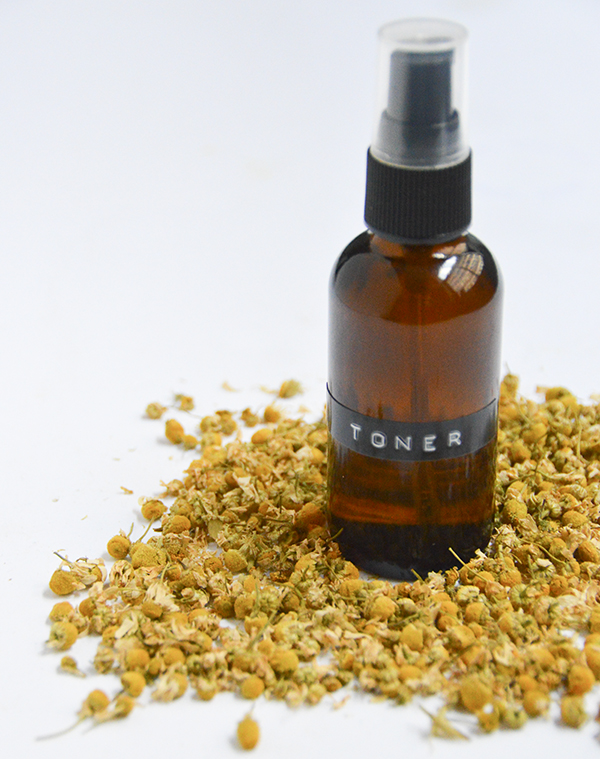
The goal of a toner is to balance the skin’s pH and provide moisture. You should apply it daily after cleansing and before a facial oil. Safe, gentle, alcohol-free toners can be hard to find, so it’s best to use a simple floral water and add some apple cider vinegar if you have rosacea or general sensitive, easily-irritated skin. Chamomile, orange blossom and lavender floral water are the most gentle options.

I personally use a German Chamomile hydrosol toner with apple cider vinegar. Read more about it and learn how to make it yourself at home here: DIY Chamomile Floral Water Toner. And if you’re looking for a ready-to-use product, I’d recommend the brand Hello Cider (organic and available via Amazon Prime).

Cooling Mist for Flare-Ups

During a flare-up, when the heat is rushing to the face, a cooling toner or facial mist can be beneficial. Peppermint is a great cooling oil, but should be used in very low dilution with aloe vera and distilled water for a facial mist.

Read all about the blend I use and other options in this post about cooling mists for rosacea flare ups.

Aromatherapy for the Bigger Picture

With holistic aromatherapy, you want to treat the issue and the symptoms, but also take a step back and look at the bigger picture. What’s triggering the symptoms? What emotional distress are the symptoms causing? What other issues are there in the person’s life that may contribute to the symptoms?

If, for example, stress and anxiety are a trigger for your rosacea flare-ups, aromatherapy for these emotional issues could be beneficial. Diffusing an anti-anxiety blend during stressful times could reduce these feelings and therefore prevent a rosacea flare-up.

I can’t speak for everyone with the condition, but I know I was feeling insecure about the appearance of my skin and really down when my rosacea was at its worse. There are essential oils with uplifting, anti-depressant effects that can be beneficial for these emotions as well.

Other Holistic Interventions for Rosacea

Using essential oils for rosacea without making any lifestyle changes to go along with it is like eating a healthy breakfast while continuing to eat processed junk the rest of the day. It helps, and it’s certainly a step in the right direction—but for lasting, significant change, you gotta go deeper.

Lifestyle Changes

Avoid extreme hot or cold temperatures, saunas, sun exposure, smoking, alcohol, caffeine, and intense exercise that causes the face to turn red. Emotional stress can be a trigger as well so prioritize self-care and stress management (yoga, meditation, diffusing an essential oil blend for stress, etc.).

From the above, it’s really just intense exercise, sun exposure and alcohol that I’m guilty of enjoying. I use a cooling mist spray after intense exercise that seems to help, and it’s really only in the summer when I get so overheated from a workout that my rosacea flares up. As for sun exposure, I started wearing a hat at the beach this past summer which helps. I do still drink alcohol but not even weekly—and I find if I stick to beer, my skin is fine.

I also wash my face with cool water now. Living in Boston, there’s just no way in hell I’m taking a cold shower in the winter. So I’ll save the cold face washing for after my shower at the sink. This has seemed to help!

Dietary Changes

Avoid drinking hot liquids and eating spicy foods. Foods that cause inflammation can be a potential trigger, so eliminating dairy, gluten and foods in the nightshade family (whaddup Tom Brady) can be helpful for some.

I don’t eat dairy or enjoy hot liquids, but I love spicy food and eat gluten regularly. I’ve turned down the intensity of the hotness of the spicy food I eat, just to be safe. I don’t have any sensitivities to gluten, and have never noticed an adverse reaction to it. I personally would only try eliminating it if my rosacea came back and stayed around and it was my last resort. That being said, if you have a sensitivity to gluten, it could be exacerbating your rosacea, and it’s worthwhile to look into that possible connection.

Products to Avoid

Products to avoid if you have rosacea are similar to those anyone with sensitive, easily irritated skin should look out for:

  • Harsh scrubs and alcohol-based toners
  • Artificially fragranced soaps, makeup, moisturizers, detergents, etc.
  • Synthetic fragrance or perfume
  • Chemical preservatives
  • Petroleum or lanolin byproduct
  • Coconut, cocoa butter and corn oils can also be sensitizing (Cooksley)

—————————

I know this blog post was long, but I really want it to be as comprehensive as possible. My goal is for it to be your go-to guide to essential oils for rosacea.

Keep in mind that everyone is different, and aromatherapy is most successful when done with the individual in mind. The oils and blends that work amazingly for me may not have the same results for you, for a variety of reasons.

My goal in sharing all this information is to give you a guidelines, upon which you can build. Try different things, ask questions, and be patient as you figure out what works best for you.

And speaking of questions, leave them in the comments below! Sometimes I admittedly slack on responding to blog comments if the post is older, so you can also always send me a DM on Instagram (@nicolepearce)—I’m very responsive there!

xo Nicole

The statements and blends referenced in this post have not been evaluated by the Food and Drug Administration. Products and/or information are not intended to diagnose, treat, cure or prevent any disease. If you are pregnant, nursing, have a medical condition or are taking any medication, consult with your physician before using any essential oil or blend.

I’m a Certified Holistic Aromatherapist through the Institute of Integrative Aromatherapy and only share blends with you that I’ve personally used and from which I’ve benefited. I stand behind them 100%! That being said, essential oil blends are most effective when made with individual needs, goals and personality in mind.

Sources

Battaglia, Salvatore, The Complete Guide to Aromatherapy, The International Centre of Holistic Aromatherapy, 2003.

Cooksley, Valerie, R.N., Aromatherapy: A Holistic Guide to Natural Healing with Essential Oils, Floramed Publishing, 2015.

Draelos, Zoe and Donald, Angela, The Effect of an Anti-Inflammatory Botanical Cleanser/Night Mask Combination on Facial Redness Reduction, Journal of Drugs in Dermatology, Volume 17, Issue 6, 2018 (http://jddonline.com/articles/dermatology/S1545961618P0671X). Jan 25, 2018.

Lacey, N., Delaney, S., Kavanagh, K., Powell, F.C., Mite-related bacterial antigens stimulate inflammatory cells in rosacea, British Journal of Dermatology, 2007 (https://doi.org/10.1111/j.1365-2133.2007.08028.x). Jan 25, 2018.
Steinhoff, Martin et al. New insights into rosacea pathophysiology: A review of recent findings, Journal of the American Academy of Dermatology, Volume 69, Issue 6, 2013 (https://www.ncbi.nlm.nih.gov/pubmed/24229632). Jan 25, 2018.

Steinhoff, Martin et al. New insights into rosacea pathophysiology: A review of recent findings, Journal of the American Academy of Dermatology, Volume 69, Issue 6, 2013 (https://www.ncbi.nlm.nih.gov/pubmed/24229632). Jan 25, 2018.

Aluminum-Free Natural Deodorants That Actually Work for Me

Best Natural Deodorants - aluminum-free natural deodorants that actually work! I'm sharing my absolute favorite brand as well as some others that may work well for you. #cleanbeauty #naturalskincareI am on a seemingly never-ending search for the perfect aluminum-free, natural deodorant. And while I haven’t yet found my holy grail of armpit freshener, I have found some pretty damn good options that I want to share with you guys because who knows, one of them could end up being your perfect match. (3/29/18 UPDATE: I have found my holy grail of natural deodorants! Details below.) As with all skincare products, there isn’t a single concoction that’s going to work perfectly for everyone. We all have different skin types, hormonal balances and genetics, so you kinda have to treat any product search like you’re a human science experiment.

Skincare, hair care, anything beauty related—not my forte. I stalk follow countless wellness and beauty influencers on social media and am honestly just completely overwhelmed by their seemingly endless supply of all-natural, superfood-charged products. They’ve got under eye cream made from the organic nectar of rare indigenous plants plucked off the peak of Mount Everest by a world renowned Shaman and I’m over here using some clumpy-ass mascara I found on sale at CVS that probably expired in 2013.

Womp. Womp. Wommmmmmmp.

Rather than be overwhelmed by replacing every single product in my bathroom with all-natural versions at once, I like to focus on the stuff I put on my body every single day. Just like eating a Twinkie once in a while isn’t going to give you cancer, wearing red lipstick with artificial dyes in it once a year on New Years isn’t going to kill you. It’s the day-in-day-out stuff that makes a difference. Like deodorant. I wear it every day so I do really care what’s in it.

A few notes about my experience finding a good-for-you deodorant…

  • Embrace sweat. I feel like a bit of an a-hole preaching this because I work from home and at a fitness studio–two places it’s perfectly acceptable to be sweaty. I also have never had an issue with excess perspiration which I know is an extremely frustrating condition for a lot of people. In general though, sweating is a healthy bodily function and very few aluminum-free natural deodorants are also anti-perspirants (I think Tom’s has an anti-perspirant option?).
  • Be patient. When you try a new product, it takes time to truly know how it works with your body. And especially if you’re switching from an aluminum-containing anti-perspirant to an all-natural deodorant–there’s going to be a serious adjustment period. For me, things got worse before they got better. I felt like I sweat more and smelled worse for the first couple weeks after I ditched the “bad” deodorant. And Joe made sure to remind me of it every day (LOL). Eventually everything balanced out and I could accurately gauge if the natural deodorants were working for me.
  • Baking soda isn’t perfect. Not because baking soda is bad, but because I hate what happens when I sweat. If I’m wearing deodorant with baking soda in it and I start sweating during a workout, I get these crusty white streaks down the sides of my body (so hot right now). Does this happen to anyone else?? Baking soda also causes a lot of people to get rashes. I notice some minor red bumps occasionally but nothing too bad.
  • I avoided pastes. There are a lot of paste deodorants out there but I don’t like the idea of needing to wash my hands after applying deodorant. I’d rather use a stick or spray than have to rub something under my pits each morning with my fingers.

Ok now on to my recommendations!

The Best Natural Deodorant (IMO)

11/26/18 UPDATE: Up until a couple months ago, I would have said that, hands-down, Native is my favorite natural deodorant. However, in early September, after months and months of using Native with no issue, I started getting terrible, painful underarm rashes. I know baking soda can cause this, so I decided to switch to a deodorant without the ingredient. Since switching to PiperWai, I’ve had no rash issues and I’d say it works just as well, if not better, than Native. Score! I’ll continue to keep you all posted if anything changes.

PiperWai ($16.99, available in jar form for $11.99)

Best Natural Deodorants - PiperWai activated charcoal deodorant

PiperWai’s deodorant has activated charcoal as the main ingredient and is designed with sensitive skin in mind. Since switching to this baking-soda-free deodorant, I haven’t had any issues at all with underarm rashes or irritation. It smells amazing and works just as well as the other brands I’ve tried with baking soda in them.

A little tip if you buy it in stick form: Hold it against your armpit for a few seconds before rubbing on. The heat from your body will soften it a little so that it goes on smooth.

Native Deodorant ($12)

Best Natural Deodorants - aluminum-free natural deodorants that actually work! I'm sharing my absolute favorite brand as well as some others that may work well for you. #cleanbeauty #naturalskincare

This deodorant came highly recommended on Instagram in response to one of my stories and you guys did not let me down! I’m obsessed!! I had come to accept the fact that natural deodorant just didn’t work perfectly. I’d always be a little smelly. Washing my pits and then reapplying my stick of baking soda would just be a regular part of my day. This was going to be my life.

Maybe because I’d let the bar drop so low, I was BLOWN AWAY at how well Native works. It goes on smooth and softly (other brands can be rough to apply), doesn’t leave a sticky residue, smells good and keeps me stink-free all day.

Native deodorant is aluminum-free, paraben-free, phthalate-free and talc-free. They have seasonal scents in addition to originals and sensitive versions. I went with fir & lemon (seasonal scent so not currently available) and love it.

As an added bonus, if you use one of the links to Native in this blog post, you’ll get a free mini travel-sized deodorant with your purchase (not sponsored—just a referral link!).

Aluminum-Free Natural Deodorants That Are Good But Not Great

These deodorants were good in their own way, but each had a downside I couldn’t get over. That being said, they all came highly recommended by other people so they could work great for you.

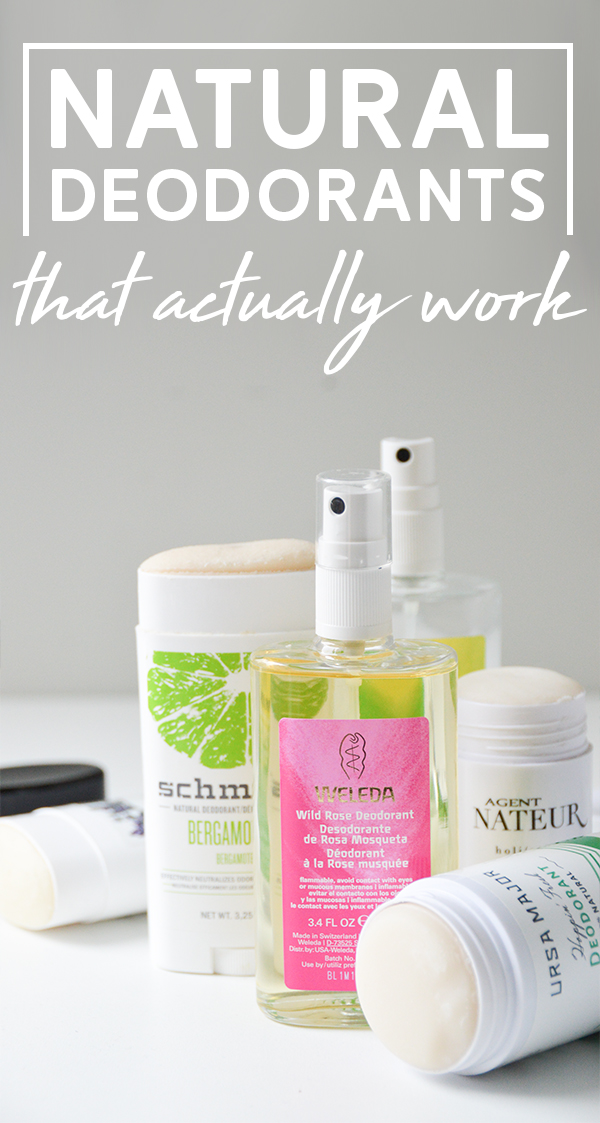
Schmidt’s Natural Deodorant ($7-10)

Schmidt’s deodorant is free of aluminum, phthalates, parabens and propylene-glycol, and is certified vegan and cruelty-free. It worked well for me almost all day. I could put it on in the morning, teach three classes, come back home and work a full day and have no issues with body odor. It absorbs fully so that you’re not left with sticky pits and it contains plant-based powders that help absorb wetness. I don’t think you’ll really get a true anti-perspirant without aluminum, but I definitely noticed a reduction in sweating with Schmidt’s versus some other natural options.

I’ve only tried the Bergamot + Lime, but there are lots of other scents as well:

  • Lavender + Sage
  • Cedarwood + Juniper
  • Ylang-Ylang + Calendula
  • Rose + Vanilla
  • Fragrance Free

They also have formulas for sensitive skin (maybe this would have worked better for me?) and a new charcoal one which is intriguing.

The downside: Caused some mild skin irritation for me. I’m not sure if it’s the ingredients or just that it goes on a little rough, but I’d get red bumps and some minor irritation under my armpits when I used Schmidt’s.

Ursa Major Hoppin’ Fresh Deodorant ($18)

I love love loooove Ursa Major. I use their face wipes and face lotion regularly and was excited to try their deodorant. First off, it smells amazing. My four-year-old niece always made me give it to her before I put it on in the morning so that she could sniff it when I visited (haha). It goes on smoothly (way smoother than Schmidt’s) and feels fresh and cooling. It absorbs fully, too, so that you don’t feel sticky. The $18 price tag is high, but the stick is big and lasted me three months.

The downside: It doesn’t last all day. I find I had to reapply this multiple times throughout the day and ended up carrying it around in my bag. On super active days when I teach multiple classes and then do my own workout I can understand that, but even on rest days I typically had to reapply 2-3 times to stay fresh. And you can’t just reapply—you have to wash your armpits to really get the stink away and then reapply.

Limes

No seriously. My mom has been using limes as her deodorant for years (like straight up just rubs lime wedges on her armpits), and while I thought it was just another thing to add to the Weird Things Mom Does list, I gave it a try and it really does work! You cut off a wedge (1/4 lime covers both pits for me), give it a little squeeze to get it juicy, and then rub it on gently. Sometimes little pieces of pulp rub off and you have to pick them off, but other than that you just let it dry and are good to go. It doesn’t feel sticky or anything and it’s really effective at preventing body odor—I was shocked!

The downside: The logistics. You need to have your kitchen stocked with limes at all times which isn’t so bad but what about bringing your “deodorant” with you to the gym? What about when you travel? It was just getting to be a hassle bringing around my little lime wedges with me in baggies. I was testing out this method while traveling to Palm Springs for my friend’s bachelorette party and I’m pretty sure TSA thought I was insane when they looked in my carry-on.

Also, a little tip if you’re going to give limes a try: Don’t apply them immediately after shaving—it stings!

Weleda Deodorant ($14)

Weleda products are made in Switzerland and are all free of synthetic preservatives, synthetic fragrances and synthetic chemicals. The deodorants come in a glass spray bottle and I find three pumps per pit is enough to do the job. I like the spray application and it absorbs and dries quickly and then really does last ALL day. As far as effectiveness goes, I was really impressed by this deodorant.
The downside: Its main ingredient is alcohol. The smell of the citrus reminded me of flavored vodka (aka bad flashbacks to high school) and the smell of the wild rose reminded me of perfume. Scent issues aside, I had heard products containing alcohol aren’t good for your skin. I didn’t know much more beyond that, so I decided to do a little research on the topic.

Fatty alcohols (common examples are cetyl, stearyl, and cetearyl alcohol) are A-OK. They’re non-irritating to the skin and serve to keep ingredients stable in products. Simple alcohols (common examples are methanol, ethanol/ethyl alcohol, isopropyl alcohol and denatured alcohol), which give products an anti-bacterial property, can dry out the skin and therefore weaken its role as our protective barrier. Weleda uses organic grain alcohol which is ethyl alcohol. Bummer.

From what I’ve read, I don’t think it’s the worst thing you could put on your skin, but also definitely not the most nourishing. This article and this article were helpful in explaining the different alcohols for anyone interested.

Other Natural Deodorants I’ve Tried That Didn’t Work

During this deodorant mission, I’ve also tried out a few that didn’t work well at all (for me anyway). They’re worth mentioning because who knows—maybe they’ll be your perfect fit!

  • Tom’s of Maine – I smell worse when I wear Tom’s than I do when I wear no deodorant at all. How is that possible?! I want to like this product because I think Tom’s is an amazing company but it just does not work at all for me.
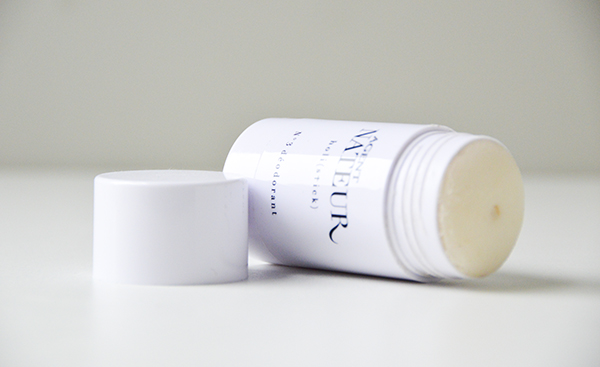
  • Agent Nateur – I kept seeing this marketed as the “it” deodorant in LA (probably code for: Gwyneth wore it once lollollol) but while I love the scent, it doesn’t absorb well. I’d put it on and then feel like I had a sticky paste under my armpits the rest of the day. No thanks. And at a whopping $19 … Awww HELL to the muthafukkin no thanks.
  • Nourish Organic – I love the smell of their Lavender Mint stick and the formula definitely works for me but OUCH. It is so rough going on! The texture is like an exfoliating scrub and I just couldn’t get over that which is a bummer because the smell is uh-mazing.

Ok your turn! Have you tried any of these brands? Which work and don’t? Any suggestions for other brands I should try? Let’s talk deodorant! 

xo Nicole

Links are affiliate.