Win a Ticket to WELL Summit NYC!

Happy Friday people! As a reward for reading yesterday’s long-ass blog post, I’ve got a giveaway for you today. As you may know already if you follow me on Instagram, I have a ticket to the WELL Summit NYC that’s going to one of you!

This two-day conference focused on all things wellness is taking place in Brooklyn on October 5th & 6th. To enter to win a general admission ticket (valued at $449!):

  • Follow @wellsummit
  • Follow yours truly (@nicoleperr)
  • Leave a comment on the picture embedded below (or here on Instagram) with a food emoji and tagging a friend who’d also love to win a ticket

So that there’s no confusion, I just want to clarify that even though you have to tag a friend to enter, there’s just one ticket that I’m giving away. So you’d win the ticket, not you and the friend you tag (but they should enter, too!). I’ll choose a winner on Sunday and she/he will be notified via DM.

🍉GIVEAWAY!🍉 The @wellsummit is coming to Brooklyn October 5th & 6th and I get to give one lucky winner a general admission ticket to the event (valued at $449!) plus one of these tshirts I’m wearing. 🤗 — — TO ENTER: •Follow me •Follow @wellsummit •Leave a comment with your favorite food emoji and tag a friend who’d be interested in the two-day wellness event — — I’ll pick a winner Sunday and will notify her/him via DMs. Good luck! 🤞🏼 If you can’t make it to New York, tag friends who live in the area so they can enter to win! — — #wellsummit #wellsummittribe #wellnesswednesday #wellsummitnyc #bostonblogger

A post shared by Nicole Perry (@nicoleperr) on

So what is the WELL Summit, you ask? I haven’t been to the NYC one, but from what I hear it’s like the Boston one but on steroids. Except, like, the all-natural, non-GMO version of steroids since this is a wellness conference of course. 😉 It’s two full days of speakers, panel discussions, networking and yummy, healthy food (v important—I think we can all agree snacks make or break an event).

The speakers range from the Editor-In-Chief of Women’s Health to a Reiki Practitioner, so you really get a 360-degree representation of health at the conference. At the Boston WELL Summit I attended, there were breakout panel discussions in addition to the keynote speakers. You got to see the schedule of panel discussions beforehand and sign up for the ones you were most interested in, and the topics varied so that you could learn more about the wellness topics that actually interest you.

If you’re a wellness enthusiast you’ll definitely get something out of the conference, and I think those with entrepreneurial/business ties to wellness will especially benefit. That could mean anything from wanting to start a blog on living zero-waste or a fitness Instagram, to currently running a natural foods company or working for an acupuncturist. As long as you have some sort of passion or vested interest in the wellness world, I think you’ll get something from the conference.

WELL Summit NYC Discount Code

If you don’t win the giveaway, fear not. Use the code WSNicole to get $75 off your ticket price. You can choose between a two-day pass, a single-day pass or a VIP option, all at different price points. Details to purchase tickets can be found HERE.

Good luck to everyone entering the giveaway and have a great weekend!

xo Nicole
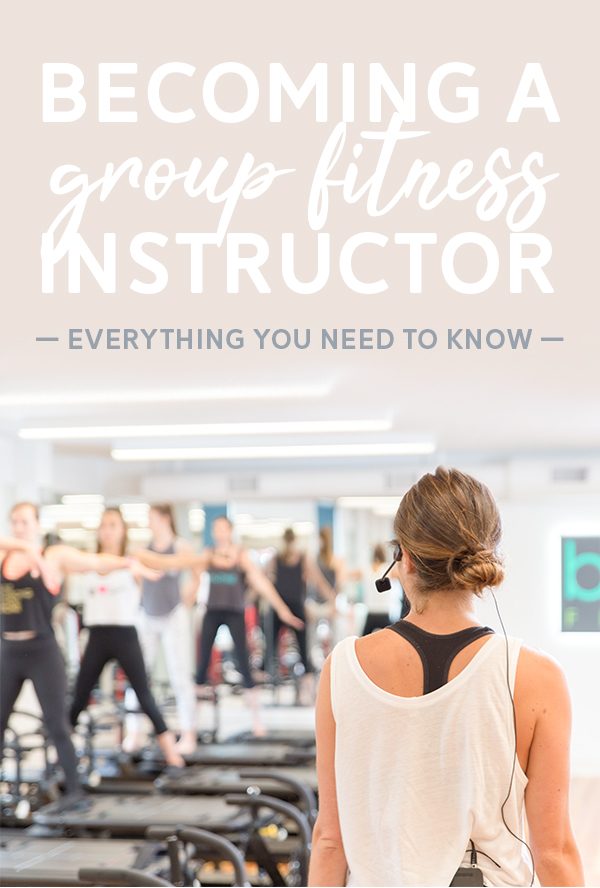
Everything You Need to Know about Becoming a Group Fitness Instructor

Everything You Need to Know about Becoming a Group Fitness Instructor

With the current popularity of group fitness classes and boutique fitness studios, more and more people are seeing group fitness instruction as a viable career option. I get questions almost daily from people interested in teaching—whether it’s a couple classes a week in addition to their 9-to-5, or as a full-time job. Can I really make a living doing it? What certifications do I need? Is it as fun as it seems? I’m going to answer all these questions and more, sharing everything (I can think of) that you need to know about becoming a group fitness instructor.

This blog post is LONG. It honestly could have been an ebook. But I wanted to make sure that I answered all the questions I get, and I hope this can serve as a comprehensive reference for anyone interested in instructing. I love teaching and there’s no doubt that it’s an incredibly rewarding job. But you need to know what you’re getting into, especially if you’re wanting to do it full-time (spoiler alert: it will require a LOT of your energy, both physical and mental).

Because training programs and your general path to teaching are going to vary a bunch depending on what you want to teach and where, I’ve enlisted the help of some fellow trainers in Boston as well. In the last section of this blog post, a handful of instructors will weigh in with the certification programs they did, what they’d recommend, and other advice they have for you. Definitely read this section! I tried to cover as many methods of fitness as possible so we’ve got barre, yoga, spin, boxing, bootcamp, strength training, Pilates and more represented.

Certifications, Training Programs, Qualifications

Let’s start with the basics. What qualifications do you need to teach group fitness? Well, that really depends on where and what you want to teach. If you already know where you want to teach, Step 1 is to reach out to that gym or studio and ask them what credentials they require of instructors and what certifications they accept. They may do their own in-house training and not require any other prior certifications. Or, they may require a general group fitness certification or certs specific to the methodology you want to teach. Even if other certifications are required, most studios will also have some sort of in-house training you’ll need to do as well.

You don’t need to be a Certified Personal Trainer to teach group fitness. If you do get your CPT though, many studios won’t require you to have a group fitness certification. That being said, a group fitness cert is a lot less expensive than a CPT cert, so it might be the best place to start. These are the group fitness certs I’d look into, as they’re widely known and accepted:

  • AFAA – This is probably the group fitness cert I most commonly hear instructors have gotten.
  • ACE – From what I’ve heard, ACE isn’t accepted at as many gyms. AFAA might be the better choice. I haven’t done either though, so I can’t really speak to the quality of the certs.
  • ACSM – ACSM is known more for their personal training cert than their group fitness cert, but if you think you do want to get your CPT as well, it could be a good choice. I’m pretty sure they offer member pricing that would get you a discount on the group fitness if you’re already a CPT through them.

Again, you don’t really need any of the above if you want to teach a specific methodology that has its own training course. And here’s the thing with a lot of these national/global certifications (both personal training and group fitness). You get the book/manual and study materials, you read through it at home, and you then have to take a test. If you pass that test, yes, you’ll be “certified” but you will *not* feel ready to actually teach and train. Hands-on learning and practice is so important. Both for your benefit and your future clients’.

Some of these programs won’t require in-person training but will offer it for an additional cost. Do it! I wish I had when I got my NASM personal training cert. If it’s not offered, reach out to a trainer or instructor you look up to in your area and ask if you can shadow them and practice with them. I think the in-house training that most fitness studios do typically emphasizes this, so you’ll get plenty of practice then as well, should you choose to go that route.

What Certifications I Did

This is what my certification path looked like: First, I decided to get my personal training cert. Not so much because I wanted to train clients 1:1, but because I wanted to know my shit for creating workouts to share on the blog. I went through NASM and wrote a blog post about my experience with that if you’re interested in learning more.

As I was finishing up my CPT, I discovered Btone and was becoming obsessed with the classes. It was unlike any workout I’d ever done and I loved how intense it was while still being totally low-impact. They were doing a training session for new instructors, so I reached out and started Btone training pretty much immediately after becoming a CPT. In addition to the Btone in-house training, I’ve done the spinning certification through Mad Dogg and the Indo-Row certification (<– links go to blog posts about each).

There are lots of cert routes to go, so definitely read the last section of this post to see what other trainers have done as well!

Getting a Job: Auditioning, In-House Training, Practice

Being certified doesn’t guarantee you a job. Typically there’s also some sort of audition, and that audition will determine your acceptance into the studio or gym’s in-house training program. Upon completion of their in-house training, you’ll then be hired. It’s also worth noting that some studios require you to have teaching experience prior to even auditioning. Reach out to your studio of choice (or an instructor who teaches there) to ask about specific requirements and processes.

My best advice prior to auditioning is to take as many classes at that studio as you can. If you don’t already have favorite instructors, ask regulars who the most experienced instructors are and take their classes in particular. Pay attention during the workout—how are they structuring the class? What cues are they giving that are particularly helpful? How are they transitioning clients from one exercise to the next? What about their class do you love? What makes it effective?

When I was starting out at Btone, I had a running Google doc going of notes I’d jot down after taking another instructor’s class. It was filled with cues I liked, exercise combos that felt particularly effective, and anything that made the class stand out to me. I still to this day jot down exercise sequences after classes (both in Btone and elsewhere) that I like. Even long after you become a group fitness instructor, you should never stop learning from your peers.

Being nervous is to be expected, especially when just starting out. With practice and experience, those nerves will subside. And once you’re comfortable teaching one type of class, it’s way easier to then pick up teaching another. It, of course, helps if you’re comfortable being in front of a group of people. I’m not the most outgoing person, but I’ve always been comfortable with public speaking, and growing up I enjoyed being on stage in dance recitals and even playing sports in front of crowds (small crowds, I was no college athlete here people haha). I think that helped me a ton in keeping my nerves down to a controllable level when I first started teaching. Was I nervous? Hell to the motherfucking yes. My hands were shaking while taking attendance. But I could get my words out, brush off the mistakes, and ten minutes into class started to calm down and find a groove.

Lots of studios require you to teach a mock class (or several) before getting the official “ok” to teach on your own and this is a great way to get out those first-time jitters. The more you practice, the more comfortable you’ll feel when it’s time to start. But keep in mind that you’ll NEVER feel 100% ready for that first class. At some point, you have to just jump in knowing it’ll get easier and easier with every class you teach.

One thing to note is that teaching a class is a lot different from taking a class, and teaching will change your relationship with the workout. You might absolutely adore a certain class and then go through in-house training and realize that you don’t have that same passion for teaching it. That’s ok! Honestly most studios expect this to be the case for at least a couple of their trainees so don’t feel bad about deciding not to teach after doing the training.

Starting Out as a Group Fitness Instructor

Like with other jobs, you’ll have to pay your dues when you first start out. In the group fitness world that means less-than-ideal time slots (expect to teach on weekends). When I first started teaching at Btone, I had a Sunday morning shift and I commuted out to Wellesley on Tuesdays to teach a shift at that location. Most weeks it’d take me longer to drive out there in traffic than to actually teach the class! I also always offered to sub. If another instructor had something come up, I’d try to be the first to volunteer. This meant that some days I’d teach up to EIGHT classes in a single day (oh to be young again … I’d die if I did that today lol).

Gradually other permanent shifts opened up, and as new trainers came on, I was able to slowly tweak my schedule into one that is perfect for me. But it took years, so be patient!

Let’s Talk Money: Costs of Training & What You Can Expect to Make

Certification programs are not cheap. They can range in cost from a couple hundred dollars to a couple thousand. And then you typically have to pay for the specific studio’s in-house training program as well. Is it worth the investment? If this is really something you’re passionate about then yes, of course!

I don’t regret paying for any of the certification and training programs I’ve done—even those which I don’t use today (spinning, rowing). All types of movement and fitness are connected, and the more you can learn, the better the instructor you’ll be. You’ll find that things you learn in yoga teacher training can be applied to that bootcamp class you teach. Form cues taught in barre training might be useful in the arms section of the spin class you teach. Do I need to know how to properly perform a kettlebell snatch to teach a kickass Btone class? No. But would that knowledge help? Yes! It’s all connected. You can draw knowledge from all different modalities and apply them across specialties. The more you know about the human body and movement, the better. That’s why continuing education is so important even long after you start teaching group fitness.

Can You Make a Living Teaching Group Fitness?

Short answer: Yes. But can you physically and mentally teach the number of weekly classes required to make said living? That’s up to you to decide. You need to *really* have a passion for it.

I’m not going to share specifics of what studios and gyms in Boston pay their instructors (I doubt they’d appreciate that very much lol), so instead I’ll just give some general expectations and pay structures. This will vary by studio and city.

Some studios give a flat-rate payment per class, regardless of how many students are in the class. I would say the majority (at least in Boston), have some sort of per-head payment structure built in to incentivize instructors to teach a high-demand class that fills up week after week. In this case, it’s usually a base payment and then a bonus on top of that if the class is filled beyond a certain number. Or, it’s a base payment and then a certain amount per head.

A stand-out instructor will fill classes, but so will a good class time. If a not-so-great instructor is teaching a 6pm class on a Wednesday, it’ll probably still fill up because lots of people with a 9-to-5 job want to workout at that time.

Another thing factoring into what you can expect to make is how large the max class size is. If you’re teaching at a studio that can accommodate 40+ people in a single class, there’s probably an opportunity to make a lot of money. The highest I’ve heard a studio paying is $100(ish) per class with an additional full-class bonus. So probably like $125-150 for a full class. THAT IS THE EXCEPTION NOT THE RULE. Expect to start out making more like $20-$40/class. It’ll be less than that at some gyms and studios (especially if you have no experience), and more than that at others, but I think $20-40 is a safe estimation.

From there, you can do the math. How much do you need your annual salary to be to live comfortably? How much per week does that come out to be? How many classes would you need to teach per week to make that?

Teaching hours aren’t regular hours. A full-time desk job may be 40 hours, but if you teach 40 classes a week you are either superhuman or trying to drive yourself insane. Most full-time group fitness instructors I know teach about 25, give or take, a week. If they have some private clients in addition to group classes (or just teach at a really high-paying studio), that may be more like 15+ a week. I know some who teach 30+ a week but they stack the classes so that they have a full weekend off. If you don’t do that, you’ll burn out quick.

Non-Monetary Perks

There are other perks that come with the job. You typically get a free membership at the gym where you teach or free classes at the studio where you teach. Those free classes might be on a drop-in basis though. In other words, you can’t sign up ahead of time, but if there is space in a class, you can jump in and take it.

As an instructor you also get discounts from some activewear brands (Lululemon, Athleta, Outdoor Voices to name a few). Also some fitness studios offer discounts to instructors at other studios.

But if you want to teach solely for the perks of getting free classes at your favorite studio, I’d advise against it. Teaching requires a lot of energy, and it’ll change your relationship with the workout.

The Stuff You Don’t See as a Client: Planning Classes, Burn-Out, Health-Insurance, Etc.

There are some logistical considerations when taking the career path less traveled (aka becoming a group fitness instructor full-time). You’ll need to get your own health insurance unless you can go on your partner’s or are young enough to stay on your parents’. Some big-name gyms and studios might offer it (maybe SoulCycle does?) but that’s rare. I get mine through Obamacare and actually really like my insurance but with dental it’s over $400/month so factor that into your income calculations. There are cheaper insurance options out there, I’m just giving you an idea of what to expect.

Filing taxes can also be a rude awakening if you’re a 1099 instead of a W-2 at the gym or studio where you teach. If taxes aren’t being taken out of your paychecks, make sure you’re setting aside some money from each one so you don’t have a meltdown when you go to file your taxes and see what you owe.

And yes, there is the potential to make great money teaching and training, but $XX per 45-minute class is really $XX per 45-minute class PLUS the time it takes you to plan said class. When you first start out, it will take you a lonnnnng time to plan a class. Don’t be discouraged—the more practice and experience you have, the less time it will take you, but you should still factor it in. Some studios give you a set class plan so you’ll just need to memorize that instead of planning your own. I’d also recommend you save class plans that go over really well with clients so that you have a bank of workout routines you can go back to or draw from. This comes in handy if you’re especially busy one week and don’t have time to sequence all new routines.

If you talk to any full-time group fitness instructor, I guarantee they’ve dealt with their fair share of burn-out. It is no joke. Teaching a class requires a lot of energy, both physical and mental. Being “on” like that, class after class, week after week, will wear on you if you’re not making sure to prioritize your own self care.

When I was teaching 20+ classes a week in addition to blogging, I was too exhausted to workout myself. To combat the constant tiredness, I was drinking a ton of coffee, craving sugar and eating like shit. I was burning the candles at both ends, holding another flame in the middle of the candle, and dumping kerosene on the whole thing. Teaching fitness was making me less fit. If this is starting to happen to you, it’s a sign you need to cut back on your class load.

Weeks like that are fine here and there, and honestly just part of the job. You might be subbing for another instructor or have the opportunity to teach a fun event you don’t want to pass on, and before you know it you have a seven-day stretch of nonstop teaching. When that’s the exception and not your norm, it’s manageable and can even be fun. But don’t schedule yourself so that every week is like that. I promise you, you will burn out and be miserable.

Important:

Before we hear from some other trainers, I want to make sure this post isn’t just totally discouraging you from becoming a group fitness instructor. I want it to be realistic and paint a COMPLETE picture of the job, not just the fun, glamorous stuff you see on social media. It *is* an incredibly rewarding job. The relationships you build with your clients and fitness community are beyond special. For many clients, your class will be the one hour of their day when they get to do something for themselves. What a privilege to have them chose to spend it in your class?! And it’s fun! You’ll have classes where the energy in the room is just on fire and you’ll leave the studio on an out-of-this-world high, literally skipping down the street.

I love teaching. Absolutely love it. But we all see those good things. My hope is that this post gives you insight into the work that goes on behind the highlight reel as well.

Other Group Fitness Instructors Weigh In

Big “Thank you!” to these kickass Boston trainers for sharing their experience as a group fitness instructor. If you have specific questions about the studios where they teach or the certifications they did, I’m sure they’d be happy to answer them—shoot them a message on Instagram!

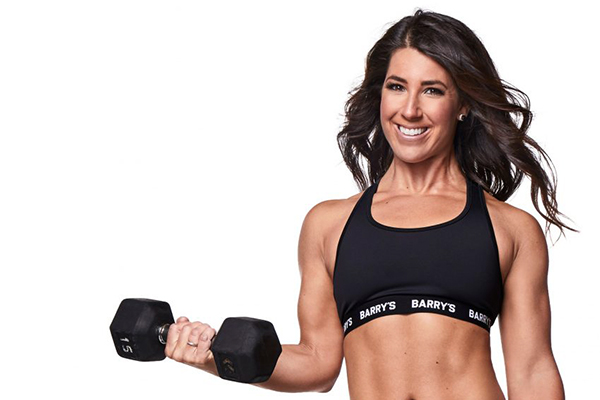
Emily Southworth – Barry’s Bootcamp

Sign up for Emily’s classes at Barry’s Bootcamp and follow her @emboslice.

What do you teach? What are you certified to teach?

I teach at Barry’s Bootcamp and my current certifications are Onnit Academy Foundations and Certified Strength and Conditioning Coach. Past certifications I’ve done include Mad Dogg Spin, PoundFIT and AFAA Group Exercise.

What was your certification/training route? What would you recommend to others (if different)?

My first fitness certification was Mad Dogg Spinning back in 2010. This allowed me to teach spin at gyms, and once I started teaching at Recycle Studio, I went through their in-house training program. I started doing personal training at Get In Shape For Women and also went through their in-house training program while studying for the NASM personal training exam. I got my Group Ex cert through AFAA in 2013 before starting to teach at Barry’s Bootcamp, and also went through Barry’s training. I got my Onnit cert and Mike Boyle’s Strength + Conditioning Coach certs in 2017.

I definitely prefer the hands-on, practical certifications vs. the purely online/test ones. I’m much more of a visual learner and found doing hands-on certifications to be really beneficial. Onnit and Mike Boyle’s were both weekend-long certs, but I got a ton out of them because we were physically going through what we were learning the whole time, vs. just reading it in a book. I’ve found the information I learned during those certs to be more applicable to the classes I teach vs. the larger certs like AFAA and NASM which are more generalized (i.e. during the AFAA cert, I had to answer questions about kickboxing).

Any other general advice for those pursing a group fitness career?

I didn’t go to school for exercise science, so it was important to me to learn as much as I could about how to safely and effectively train clients and teach classes. Just because you “love to workout” and are “in shape” doesn’t qualify you to be a trainer. You gotta back your shit up. I think social media really glamorizes the fitness scene, and it seems like everyone today is an “Instagram Fitness Model”.

I LOVE what I do and wouldn’t trade it for the world, but being a trainer isn’t for everyone. Once you become an instructor, exercising becomes your job, not just your hobby. So figure out what’s driving you to want to lead others, and understand that you don’t get to slack off—you can’t sleep through your alarm, you can’t let a bad mood get in the way of leading a class, you have to hustle to get people to show UP to your class, and you’re probably going to start off teaching some crappy time slots as you build up your crew (which doesn’t happen overnight!). Also, align yourself with a studio or gym or clients you believe in.

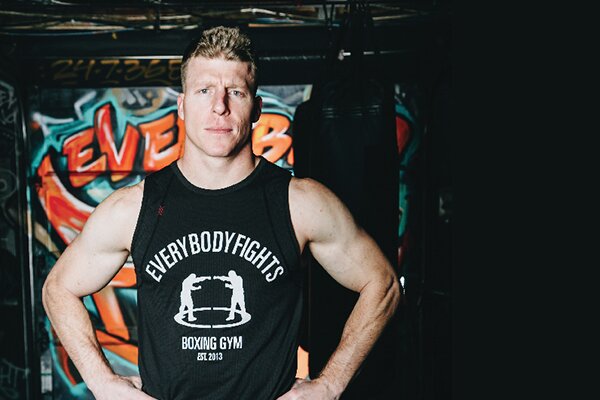
Reid Eichelberger – EverybodyFights

Sign up for Reid’s classes at EverybodyFights and follow him @adifferentbreid.


What do you teach? What are you certified to teach?

Right now, I am a full time EverybodyFights employee. I only teach at EBF and I teach somewhere between 12-20 classes a week. I also have management roles.

What was your certification/training route? What would you recommend to others (if different)?

I went to school for Sports Medicine with a concentration in Exercise Physiology. From there I got CSCS Certified (Certified Strength & Conditioning Specialist) through the National Strength & Conditioning Association. There are a lot of different certifications out there, but my recommendation to anyone looking to get into fitness would be to commit to one, like NSCA or NASM, dive in both feet, get certified as quickly as possible. Then get out and find group classes you like and network with other trainers.

Any other general advice for those pursing a group fitness career?

I’ll start with a disclaimer for those looking to be more full-time: Becoming a full-time Group Fitness Instructor is not for the faint of heart. It requires a true passion—not just for exercising, but for leading, motivating, and helping others. It is going to require burning your own candle at both ends, and you’ll need to be fully energized and engaged when most people with a “9-5” are off the clock. At times it is A LOT of sacrifice. But there are certainly rewards that come along with it.

ALWAYS continue learning (formally with more certs and informally). The more you learn the more valuable you are and the more passionate you will be.

TAKE CARE OF YOURSELF. Too many Fitness Instructors burn out because they are too busy helping other people that they forget to take care of themselves. Including yours truly!

Jennifer Phelan – Equinox & North End Yoga

Sign up for Jen’s classes at Equinox, North End Yoga and jenniferphelan.com and follow her @jppilates1.

What do you teach? What are you certified to teach?

I currently teach mat Pilates, Pilates Fusion and Barre classes. I am nationally certified by Power Pilates. I’ve completed Equinox Barre trainings in Boston as well.

What was your certification/training route? What would you recommend to others (if different)?

While I attended college at Northeastern University I completed my first Beginner Mat Pilates certification through Power Pilates at a host studio in Boston. This certification gave me the opportunity to start teaching and really discover how much I loved it. About a year later I completed my Power Pilates Intermediate and Advanced mat certifications. A few years later I realized that teaching was the career path I wanted to pursue (instead of my 9-5 job in marketing at a law firm) so I invested in completing the Power Pilates Systems 1 Comprehensive Certification which included all of the Pilates apparatus/equipment. It took about a year to complete and resulted in me gaining the confidence I needed to quit my day job and become a full time Pilates instructor—which was the best decision I’ve ever made.

Things have changed in Boston since I’ve done my initial Pilates trainings. There are now actually several host studios you can choose from to take Core Mat 1, 2 and 3 at various times throughout the year—including at one of my favorite studios, North End Yoga. Core Mat 1 and 2 are two day trainings with a test out on the final day. I highly recommend this program to get things started on your teaching path. You don’t need any prior teaching experience to complete the courses.

I’m also excited to share that North End Yoga launched it’s very own NEY Barre Teacher Training Program in 2017. The training is led by Meagan Fitzgerald and I and we are  hosting our third one this October 12-14. During the training, students learn and study the fundamental components of an effective barre class. In addition to the barre training, Meagan and I aim to help students to each find their own teaching voice and spend quality time mentoring each participant while helping to identity and work towards their personal goals. Also during the course of the weekend, all trainees participate in an individual mini photo shoot with Lucie Wicker Photography, so that they leave the weekend ready to start teaching and armed with portfolio (or Instagram) photos as well! More info here.

Any other general advice for those pursing a group fitness career?

Your certification is the starting point, not the finish line. The real work begins after you get that piece of paper. Practice, practice and practice some more. Teach to everyone who will be your student—co-workers, friends, family, your dog or baby. The more you practice getting the words out, the more easily they will flow and you’ll be able to share what you learned with others effectively.

It’s also important to remember that just like any other job, you have to pay your dues and put in the time AND effort. You can’t expect to get certified and the next week be handed prime-time classes and to pack the room with students. The teachers who are the most successful are the ones who commit and build their classes from 2 or 3 students to 30, just by showing up, delivering an A+ experience and focusing on the people who show up, not worrying about the ones that don’t.

Take as many classes from instructors who inspire and motivate YOU. Think about how you feel during their classes and why you want to keep going back. This can help you as you craft your own class plans and envision how you want to make others feel when they are led by you. Don’t be afraid to reach out to your favorite teachers. If you’re considering doing a yoga teacher training why not reach out to your favorite yoga instructor and ask them some specific questions on their trainings and if they have any advice. They might not be able to meet you for coffee but they will likely email you back or hop on a call. Personally I love chatting with people about Pilates training. It feels so great to welcome new instructors to the club.

Aly Raymer – B/Spoke & Exhale

Sign up for Aly’s classes at B/Spoke, Exhale and alyraymer.com and follow her @aly_raymer.

What do you teach? What are you certified to teach?

I am currently an indoor cycling and yoga instructor. I took Mad Dogg, Schwinn and AFAA certifications for spin a very long time ago and have been a 200 RYT (registered yoga teacher) for about 8 years. I have also taken many workshops on anatomy, adjustments, meditation and sequencing to further my yoga teaching.

What was your certification/training route? What would you recommend to others (if different)?

I have been teaching indoor cycling since 2006 and boy has it evolved over time. I started when you had to have the above certifications to teach anywhere. Over time it has evolved and each studio has their own “style”and usually their own training. For larger gyms, you can still get by on the above certs, but everywhere I have taught, there is a learning period of that studio’s specific ride. So it depends on where you want to teach!
For both, first find a studio and teacher that you love. Take a ton of classes there, get to know the audience and their style. The most successful teachers are those who can assimilate into the community and build their following by being super comfortable and confident teaching in that space.
With yoga you are able to get certified literally anywhere in the world, so maybe it’s a goal to travel and at the same time get your 200-hour. But again, once you begin the journey to teaching, it is my best advice to go the studio of your choice and really dive into the community.

Any other general advice for those pursing a group fitness career?

Get ready to hustle. You will never have the same day twice. You must say yes to everything at first to get yourself out there and gain experience. Then once you have found your community, narrow it down and chose the studios/classes where you teach your best classes. Audition everywhere you can and try to teach at smaller, lesser known studios to get the experience you need. OR bigger franchises where they are not so specific about the style, just so that you can lead an exercise class.

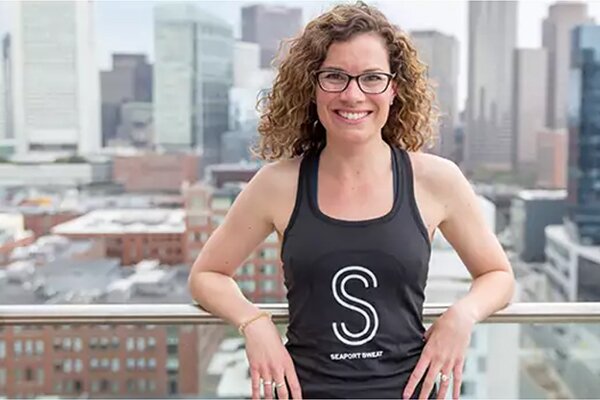
Monique Gagnon-Magno – Lifetime Fitness & EverybodyFights

Sign up for Monique’s classes at Lifetime Fitness, EverybodyFights and Seaport Sweat and follow her @burpeestobubbly.

What do you teach? What are you certified to teach?

Currently, I’m teaching primarily my own format of cardio kickboxing, and some classes have a bootcamp element mixed in. I also teach BAGSXBEATS at EverybodyFights. I’m certified to teach Kickboxing, boxing classes, bootcamps, total body conditioning classes and classes with weights.

What was your certification/training route? What would you recommend to others (if different)?

I opted for the AFAA Group Exercise certification first as it seemed to be the most broad and the best way to be able to learn the necessary fundamentals of teaching, form, etc. and to teach at many gyms as the certification is widely known and accepted. A year later, I got my kickboxing certification through AFAA as well since I was finding a niche in that area of the fitness industry. Most recently, I’ve completed the BOXFIIT certification through EveryBodyFights. I recommend finding a nationally accredited certification so that you won’t have a problem teaching at various gyms (some gyms won’t accept the more “boutique” certifications as valid to teach at their location).

Any other general advice for those pursing a group fitness career?

Do what excites you, but realize things don’t happen over night! Teaching group exercise can be challenging at times, but it’s also SO rewarding, so be true to yourself and find ways to connect with the people in your classes. When you do that, you make the members feel wanted and important, and therefore they’re more likely to come back! I also suggest getting a strong foundation of knowledge around fitness so that you can ensure you’re teaching proper form and keeping your members safe. There are so many great resources on the internet and I’m constantly learning new tips that help me be a better instructor.

__________

Fellow instructors and trainers: Anything else to add? Aspiring instructors: Any questions? Leave them below in the comments!

xo Nicole

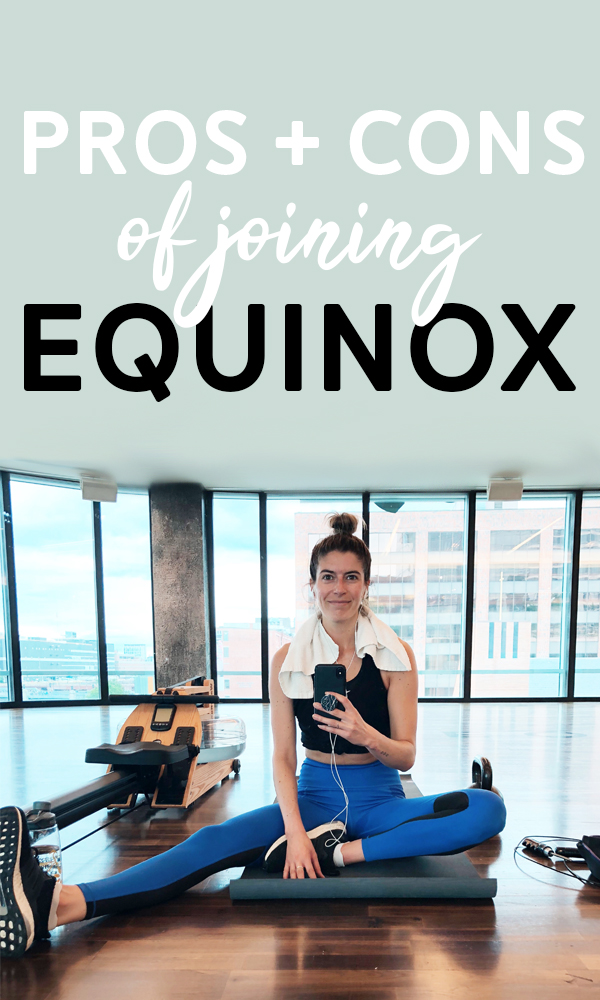
Pros and Cons of Joining Equinox

Pros & Cons of an Equinox Membership - I ditched my individual studio memberships and joined Equinox. But I'm honestly regretting the decision. Hopefully this post will help you determine if an Equinox membership is right for you!

I’m breaking down the pros and cons of joining Equinox for anyone who might be on the fence. Back in April, I joined Equinox after deciding to part ways with ClassPass (I did a post on the pros & cons of ClassPass HERE if you’re interested). I was frustrated with not being able to get into the class times I wanted via ClassPass, and on days I didn’t take classes, I wished I had access to more (and larger) equipment than what I have in my apartment. Joe has been an Equinox member for close to a decade and always raves about it, so in need of a change, I decided to become a member.

I regret joining, but it’s not because Equinox is bad by any means. Gorgeous facility, amazing amenities, a wide array of group classes with great trainers—there’s a lot to love about the gym. It’s just not a fit for me personally. My membership is currently on hold for August and September, and I’m going to make the most of the remaining year on my contract when I get back to Boston. After that though, I will not be renewing and will be joyfully running back to that boutique fitness studio life.

I’m a member at the Seaport location and it costs me $185/month. There is a passport option that’s a bit pricer that allows you to visit all the locations in Boston. There’s also a hefty initiation fee, but if you wait for them to run a promotion, I’ve noticed they waive it or discount it during certain time periods. Also if you’re referred by someone you live with, they waive it. When you sign on, you get a complementary personal training session and a private Pilates session (I haven’t taken advantage of either of these yet). You also get a new-client discount on a spa service and at their retail store. Answers to any other logistical questions you may have can be found on their website.

Pros & Cons of Joining Equinox

I can’t divide this into two neat lists of pros and cons because a lot of things that should be pros have ended up being cons to me. So instead, I’m just going to list some of the main offerings of an Equinox membership and then talk about why they do or don’t work for me. In general though, we’ll start with the good and end with the not-so-great.

Equinox has all the equipment (cardio, strength, mobility) you could need for your workout.

Equinox Seaport is a big, sunny space with a huge section of cardio equipment, stretching area, weight floor, cycling room, yoga studio and group fitness studio. They have all the machines you could want and, stored in the group fitness room, the equipment I like using (kettlebells, step benches, sandbags, resistance bands, sliders, etc.). They really have it all.

My big problem: I can’t self-motivate to use said equipment. After teaching classes and filming for the blog, the last thing I want to do is create and push myself through my own workout. Nope. Not happening. I just want someone else to tell me what to do. Plus, I think it’s beneficial for trainers to continue learning from other trainers and not just do their own routines. I guess I could do personal training sessions at Equinox but that’d be even more expensive on top of the $185/month I’m already paying.

The Seaport location isn’t too crowded.

Joe goes to the Franklin St location and says at peak hours before and after work, it’s an absolute zoo, but Seaport isn’t overly packed. After work is probably its busiest time slot, and the line for the showers can get a bit long in the morning before class, but I’ve never seen it so crowded that you can’t find a cardio machine or a space on the floor to use weights.

In the middle of the day it’s pretty dead, which is great if you’re a weirdo like me and want to use the empty group fitness room to take videos of yourself for Instagram. 😉 But I’m a morning person, and don’t take advantage of this much because I don’t like going to the gym in the afternoon (or any time after 7:30AM really).

Downside: I want to go in the morning when it’s a little more crowded, but I hate sharing equipment and space with others. Honestly I don’t like interacting with people at all when I work out—it’s Me Time! That may sound weird given my love for group fitness, but in the classes I take, you get your own machine/station/bag/etc. and everyone is sorta in their own zone. So I don’t like sharing space during peak times, but I also don’t like working out at the times when I would get my own space.

The hours accommodate any schedule.

I thought I’d love this about being a gym member vs only taking studio classes—I’d no longer be tied to a class start-time schedule and could work out whenever I wanted to! Welp, turns out being tied to a class time is actually really good for me. Also, I’m a morning person and it doesn’t really matter that the gym is open late—I only want to workout between the hours of 6 and 7:30AM. Anything later than that and forget it.

But if you’re not particular like me, then the Equinox hours make for a flexible schedule.

Equinox has a wide array of group fitness classes taught by some top-notch trainers.

There are workout classes for just about everyone offered at Equinox—whether you like strength training, cardio, dance, yoga, Pilates, barre. And the majority of the instructors I’ve tried have been awesome—knowledgeable, fun, and put together an effective workout. If you’re switching from ClassPass or being a regular at a studio in Boston, you’ll be happy to see that you’ll probably recognize at least a few of the instructor names on the group fitness schedule. Many of the Equinox instructors also teach at studios throughout Boston.

Some classes in particular I’ve tried and would recommend (there are *so many* classes and instructors I haven’t tried yet so this list is by no means exhaustive):

  • Ropes & Rowers | I love this class! It got me excited to be an Equinox member because I felt that it was of the same high quality as the boutique fitness classes I’d been taking. It’s Tuesdays at 6:30am in the Seaport and I went almost every week. You rotate between four stations that include rowing, battle ropes and weighted exercises. It’s a challenge and the instructor, Chad, rocks.
  • Tabata | I only took this class once but really liked it (you’ve probably guessed if you’ve been following this blog for a while that I kiiiiinda have a thing for tabatas). This was also taught by Chad—look for him on the schedule if you join, he’s so fun!
  • Pilates Fusion | I took Jen Phelan’s class after hearing rave reviews for years and she really is awesome! If it was offered at 6AM, I’d definitely go more frequently.
  • The Pursuit: Burn | This one’s a little gimmicky but fun. It’s sort of like being in a video game and you have different competitions and races where you see your progress in real time up on a big screen in front of the class. I’m competitive so it motivated me to really push myself.
  • Precision Running | This is a great workout that I’d do regularly if not for one thing: It’s done in the main cardio area with headphones so you can hear the instructor. This means there’s NO MUSIC. 45 minutes on a treadmill with NO MUSIC. Equinox has opened Precision Running Lab studios and I’m sure the experience is awesome there, but offered on the main floor of the gym with no tunes is tough. Lately I’ve been using the Peloton app to get a similar experience on my own at the gym (with music).

I haven’t yet found a yoga class or instructor that I love but I’ve also only tried a couple so that doesn’t say much. I think I’m biased because I’m just wildly (creepily?) obsessed with Kate’s classes at YogaWorks and in my mind nothing can compare.

The downside to offering tons of classes: Because there are so many different classes to fit in the schedule, when you find one you love, it’ll probably only be offered a couple times a week, and maybe not always at times that work for you. Some classes I’ve liked with instructors I really like are offered in the evening, and I prefer to workout in the morning. I don’t want to alter my schedule to take the classes I want—I want my preferred classes to be offered when I want to take them. That’s why specialized studios are so great for me: They offer the same class all throughout the day so that the class I love is always offered when I want it.

The amenities are great.

These will vary slightly from location to location, but it’s safe to say Equinox doesn’t skimp when it comes to its amenities. From the shampoo brand and the locker room to the steam room and the lounge area for doing work, it’s top notch. They also have a juice/smoothie bar but it’s Juice Press which I firmly believe is the most overrated maker of smoothies in all the land, so I don’t take advantage of that amenity. I honestly don’t take advantage of many of the amenities, as great as they are. I live close to the gym so I typically just go home to shower and use my own products at home.

I was most excited about the free wifi and work area since I work from home and need to get out of the house sometimes, but they play music pretty loud throughout the club so I rarely would actually be able to do work there.

Equinox’s vibe is—as the kids would say—so extra.

In some ways, this is a good thing (see previous section). But there are times it ventures into the realm of gimmicky. In one of the spin classes, the instructor said something along the lines of, “Now we enter into the 4th dimension of our patented Equinox method of hydrolapse tension training where the air molecules have been optimized for maximum caloric burn and radio frequency immersion.” What the what?! Couldn’t you just tell me to sprint? Why is everything so over-the-top? There are people in prison getting in perfectly effective workouts—do my hair follicles really need to be optimized in this class?!

I’m exaggerating obviously, but Equinox can be a little extra. A lot extra.

Through their app and cardio equipment, Equinox also provides you with a lot of numbers. Number of check-ins you had last week, number of calories burned in that last class you took—and I’m sure many more measurements if you were to use their personal training services. This would be great for people who like that stuff but personally, I hate numbers. They suck the joy out of staying active and working out for me. They make me feel obligated to do things and hit certain marks. They make me obsessive.

If you like all the bells and whistles, Equinox is a great choice. If you just want access to some weights and cardio equipment, and aren’t picky about group classes, I’d save your money and join a different gym.

The easiest way to get out of an Equinox membership is to get abducted by aliens and vanish from Planet Earth.

I knowingly signed a 12-month contract, so this is not me complaining that I’m stuck paying Equinox for a year—I 100% brought this on myself. But it’s worth emphasizing for anyone who is on the fence about joining. Don’t do it lightly! Once you commit, it’s *extremely* hard to back out. I wish they had a 1-month trial membership and at the end of the month you could either decide to sign on for the rest of the year or cut ties without consequence. Through guest passes, you can workout at Equinox for a day to get a taste of it before joining, but in my opinion it takes several weeks to really know if something is going to work for you or not.

To get out before the year is up, you need a doctor’s note saying you can’t work out or proof of relocation to a city that doesn’t have an Equinox. I can’t bring myself to get a doctor’s note because I feel like lying about that stuff is going to jinx me. Like kids who lie in college about a grandparent dying to get out of a test boggle my mind. Don’t put that shit out there into the Universe! Are you crazy?!

Currently my membership is on hold for August and September since I’m not in Boston. It’s $30/month and you can put your membership on hold for a maximum of three consecutive months. Typically they charge you the full cost for the whole year and then once your membership switches to month-to-moth, they’ll charge you the $30/month for the time you were on hold. Thankfully, they made an exception for me. If they hadn’t done this, I’d be paying $185/month despite the fact that my membership is on hold and I’m not allowed to even access the gym. Then *after* 12 months of paying the full price, I’d need to stay on for an additional couple months to actually get my $30/month savings when I wasn’t using the gym.

I know I sound like a bad stereotype of the flakey, noncommittal millennial by complaining about a contract that I willingly signed, but this whole policy makes me love boutique studios all the more. They’re so much more flexible with their membership options! Being this ferociously locked in makes me feel like Equinox is just all about their bottom line and I’m nothing more than a monthly payment to them. Why would you want a member to stay the year if they’re unhappy?

The sales pitches for personal training and other additional services are a little overwhelming.

My mother doesn’t even call me this much.

I respect the hustle, but the nonstop phone calls and emails about scheduling personal training sessions are a bit much. And I’ll politely respond to one trainer saying that I’m not interested only have a different trainer start reaching out to me. I understand that they’re only doing their job and part of making a living as a personal trainer is selling your services, but it’s getting to be a little draining.

It goes back to my previous point about feeling like Equinox is just all about the bottom line. It’s very much a business. Yes, local boutique studios are too, but they also have heart. They feel more personal and less corporate. In all fairness, maybe Equinox could feel that way for me too if I gave it more of a chance. They do organize events for their members, and you start to recognize faces if you go to the same classes frequently. I’m sure many members do get that community feel from Equinox.

I think I just know so concretely that belonging to Equinox (or any traditional gym) is not the right fit for me, so I can’t help romanticize the boutique studios I love so much. *Cue Joni Mitchell singing, “Don’t it always seem to go that you don’t know what you’ve got till it’s gone” as I stare forlornly at my deactivated ClassPass membership.*

__________

Me? Long-winded? Nahhh. Congratulations to anyone who read this entire thing—you now know every single thought I have about Equinox. While it’s clearly not a fit for me, I’d still say it’s one of the nicest gyms in Boston. Different strokes for different folks!

Are you/were you an Equinox member? What the pros & cons for you?

xo Nicole