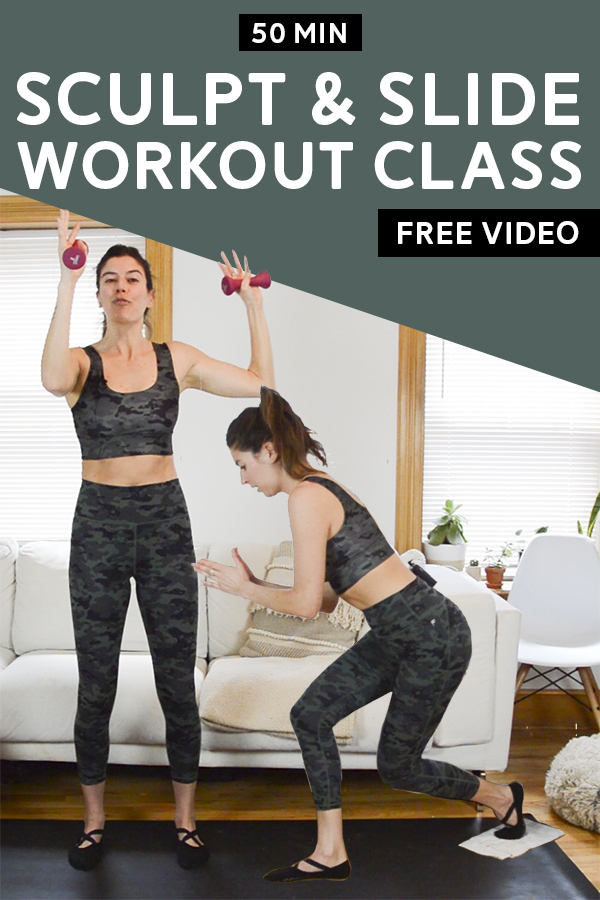
Sculpt & Slide Class (50 Mins)

Sculpt & Slide Class - This 50-minute fitness class combines sliding exercises with light hand weights and bodyweight training. Think at-home megaformer meets sculpt class. #fitnessclass #sculptclass #workoutvideo #workout #fitness

For the final day of our week of workouts, I’ve got a 50-minute Sculpt & Slide class for you. This class is my take on a home megaformer workout meets sculpt. To compare it to workouts I’ve posted in the past, think arm song meets slider workout with bodyweight training.

It’s new, so please give me feedback! If you love it, maybe I’ll create another Studio Pumps class pack using this format. If you have constructive criticism, send that my way as well so I can improve. 🙂

Sculpt & Slide Class

EQUIPMENT NEEDED:

  • Sliders – I’m using a dish towel. If you have carpet, paper plates work well.
  • Light hand weights – I’m using 2-lb weights. If you don’t have weights, water bottles or soup cans will work!

This Sculpt & Slide class is meant to be done along with the video so I’m not going to include a detailed exercise-by-exercise breakdown here. Instead, I’ll give you a broad breakdown of the flow of class.

Sculpt & Slide Class - This 50-minute fitness class combines sliding exercises with light hand weights and bodyweight training. Think at-home megaformer meets sculpt class. #fitnessclass #sculptclass #workoutvideo #workout #fitness

Warm Up – Our warm up is to the beat of the music and we’ll use light hand weights. Basic, foundational movements to get us moving. If you have any injuries or areas of particular tightness, take some time before starting the class to specifically warm up and address what your body needs, as this warm up is very general in nature.

Arm Song – We’ll target triceps during our warm up, so our arm song will focus more on shoulders and biceps. Light hand weights are used, and think of the endurance work you’d do in a barre or spin class. If you enjoy this part, check out my other stand-alone arm song workouts.

Left Leg – Our lower body flow will start with slider work and then go into bodyweight work. It’s broken up into three main exercises with lots of holds, pulses and variations:

  • Sliding lunge work
  • Tabletop work
  • Hip bridge work

Left side obliques – Our oblique series will start with bodyweight work and finish with slider plank work.

Prone work – We’ll lay down on our stomach to center off after all the focus on our left side.

Right leg & obliques – Repeat the sequence on the other side.

More prone work – building off of our last time we were here.

Center core plank finisher – We finish class with a 2-minute plank challenge with the sliders.

Cool down & stretch – I’ll take you through a quick guided cool down. If you want to spend more time stretching, I recommend this guided stretch or this guided mobility & stretch video.

Similar Workouts

If like liked this Sculpt & Slide class, I’d also recommend the following.

  • Circuit & Tabata Class (45 Mins) – This is another full-length fitness class, but uses a different structure. One is up for free on YouTube, and four other are available for purchase.
  • Arm Song Workouts – If you enjoyed the light weight, high rep endurance work we did in the upper body section of this class, I have some more arm songs: Triceps / Biceps / Shoulders
  • Slider Workouts – If you loved the slider exercises, I have a ton of other slider workouts.

xo Nicole

The Anatomy of a Great Group Fitness Class

Tips for Teaching a Great Group Fitness Class

Ok so you read my post about becoming a group fitness instructor. You decided this was the career for you, completed your certifications and landed a job. Now let’s talk about all the components of a great group fitness class. Not just a decent one, but one that stands out and keeps clients coming back week after week.

In writing this post, I’m certainly not claiming to be the best group fitness instructor out there—not by any means! I’m always striving to learn more and there is always room for improvement. I have days where I leave the studio and am like, Yasss honey, that was a killer class, go me! And then I have days when I’m totally off my game and just hope that no one in the class reviews me on ClassPass (lol).

But I’ve been at it for five years now, and beyond teaching, I’ve been a perpetual student and taker of group fitness classes. And last year, I was honored with the responsibility of doing observations for my fellow Btone instructors and giving feedback. Doing that forced me to think even more critically about what goes into a great group fitness class. So let’s talk about it! Fellow trainers and instructors, I’d love for you to weigh in in the comments section.

The Anatomy of a Great Group Fitness Class

What makes a class stand out will vary depending on the type of workout, but in general, a kickass class includes the following.

Verbal & Hands-On Form Cues and Corrections

Tips for Teaching a Great Group Fitness Class

Photo credit: Nick Cosky for Btone Fitness

As an instructor, you have to care about proper form. Period. Not only is it a matter of safety, but the exercises are going to be more effective when done properly and clients will get a better workout. In a one-on-one training session, a single client has your total attention and you can really dial in with hands-on corrections, but in group fitness settings, it’s impossible to give that level of attention to every single person. Using a mix of verbal form cues that everyone can hear and individualized hands-on adjustments where needed will give everyone the direction they need.

When I first started out, I was totally uncomfortable with making hands-on adjustments, but I’ve found that 9 times out of 10, clients want the feedback and the correction. And you can always say something before class starts along the lines of, “I may make some hands-on adjustments throughout the workout—if you’re uncomfortable with that, just let me know.”

If you’re teaching a large class, you may only be able to make hands-on form corrections when you see something glaringly wrong. Verbal form cues, however, can be given to everyone throughout the workout. And it’s super satisfying to say an adjustment, “Slide your left hip forward an inch” and watch everyone self-adjust. Not everyone will have the body awareness to just go off verbal cues though, and that’s where you gotta get handsy.

Constantly explaining the proper way to perform an exercise can be exhausting (and extremely repetitive), so that’s why it’s important to take classes outside of your own and pay attention to the cues other instructors are using. I’m constantly picking up things from other trainers. Sometimes an analogy or way of cueing a position or muscle activation will just click—Yes! What a great way to describe what I want the class to do with their glutes!

One note on giving verbal corrections: Give general form advice over the mic (“Legs are active in this plank, squeeze your quads as if you’re lifting them off your knee caps”), but push the mic aside/turn it off when correcting an individual and instead walk up to them (“Mary, lift your hips up an inch and shift your shoulders back over the elbows”). Most people don’t appreciate being called out in class over the mic unless of course it’s to be given praise. 🙂

Using Clients’ Names

If you’re teaching a large class, it’d be damn near impossible to remember every single person’s name and use it throughout the workout. There’s no more than 14 people in a Btone class and I can’t even manage that lol. (Some instructors do and it’s beyond impressive!)

While I don’t think it’s necessary to give every person a shoutout, using a few names to give praise and motivate lends the class a more personal feel—even for those whose names you don’t know! I make a point to remember a name if it’s the client’s first class so that they feel welcomed and part of the studio family right away (“Great pace, Kim—perfect!”).

I also use the names of regulars to give praise, and if a student is advanced, I may refer to them for a demo (“Cara is in the move in the middle of the class if you need a visual!”). That’s particularly necessarily if I’m teaching a full class and don’t have a machine on which to demo. I only would draw attention to clients I know well to avoid making anyone uncomfortable, and it’s a nice way to acknowledge them for crushing their workouts with correct form week after week.

And I don’t know about you guys, but I find I push myself harder if the instructor knows me and my name. When I hear my name it’s like, “Ok, they see me, they know what I’m capable of, I better crush this.” Then again, I’m super competitive so that could just be me. 😉

Providing Individual Attention within the Group Setting

Tips for Teaching a Great Group Fitness Class

Photo credit: Megafood

This point draws on the previous two. In a Grade A class, you leave feeling like you got some individual attention within the group setting. Maybe it was a form adjustment, or maybe the instructor acknowledged you for absolutely crushing that final sprint.

Of course, the feasibility of providing every single client with some individual attention is going to depend on the class size, but there are other ways to make a client feel seen beyond using his/her name and making hands-on form adjustments. Eye contact, a smile and an encouraging nod can go a long way.

You can also give praise in larger groups: “Form looks great on this side of the room!,” “I see you, back row, crushing it!,” etc. This is a good way to acknowledge clients when you have a large class size and/or can’t remember names.

Class Plan Is Challenging/Effective for Most Advanced Person in Class, but Scalable for Everyone

A challenge that arises with leading a group workout versus personal training is that you need to accommodate a range of fitness levels and abilities within one class (unless it’s a specific Intro or Advanced class). When I’m observing the class I’m teaching, I look for two big things to determine if it was a successful routine:

  1. The most advanced clients were clearly pushed outside their comfort zone at least a couple times throughout the class.
  2. Beginner clients were never discouraged.

The key to achieving both is to GIVE MODIFICATION AND/OR ADVANCEMENT OPTIONS. One more time a little louder for the people in the back:

GIVE MODIFICATION AND/OR ADVANCEMENT OPTIONS

Depending on what you’re teaching, this might mean giving a range of weight/resistance options to use, a range of speeds, and/or explaining different variations of an exercise. But the bottom line is you have to give options to accommodate everyone’s fitness level.

For a class like Btone that flows one exercise right into the next, it can be challenging to convey all the necessarily information during the nonexistent transition time. So a good rule of thumb is if the class skews advanced, start them in the challenging move and then immediately explain how to modify. If the class skews beginner, start them in the easier version of the exercise and then give the option to advance.

Because of the time of day I teach, I have a lot of advanced clients who’ve been regulars for years in my class. So I plan a challenging routine, but am vigilant about giving modification options for every. single. exercise.

I don’t want newer clients to be discouraged by certain exercises or by the people around them doing crazy advanced versions, so I also like to verbally acknowledge the difficulty level and encourage the modifications. I explain how it’s more effective to do the modification properly for the full duration than to do the advanced version and have to stop every rep and sacrifice proper form.

Account for Injuries/Limitations

Before class, ask if anyone is working with any injuries or limitations that they’d like you to know about. This way you can anticipate parts of the workout in which you’ll want to offer specific modifications to accommodate them. You’ll also know that if they’re doing something other than what you’re instructing, it’s not because they don’t understand and need correction—it’s just because they’re adjusting as needed to an exercise that works for their body.

In a group class, you can’t cater the entire routine to one person’s injury, and for the most part, clients understand that. Especially if this is an ongoing issue, the client will probably know more about and be better equipped to adjust for their limitations than you. Encourage them to listen to their body and break from the class routine as needed, and offer alternative options when you can.

Working around injuries and limitations is great, but there may be incidents when it’s unsafe for a client to be working out at all, and that’s when you have to make a judgement call. Hopefully there’ll be a manager or studio owner to take that responsibility off your hands, but if you don’t feel comfortable having someone in class because you feel it’d be putting their safety at risk, you should nicely address that with them.

The “Why” Is Explained When Needed aka TEACH

Tips for Teaching a Great Group Fitness Class

There are a lot of balls to juggle when leading a group fitness class, and there’s only so much time to talk out explanations. You’re certainly not going to be holding a lecture on anatomy and exercise science during the workout, but when you can, talk about the “why” behind what the class is doing—teach them something! Good opportunities to drop some knowledge:

When an exercise or sequence is particularly hard, easy or out of the norm, assure the class it’s with a purpose. Tell the class why you’re having them do what they’re doing. If you sequenced a particularly difficult combo of exercises, assure the class it’s purposefully hard.

“I know this move is really challenging when done after that chest press, because it’s targeting the same muscles. Our goal is to fully fatigue the pectoral muscles before moving on, so it should be difficult by the last 20 seconds.”

You’re explaining the “why” behind your choices and also reassuring the class that they’re in good, qualified hands, and that there’s a method to the madness. 😉

Talk about common form errors, especially if you notice several clients making them. And you can take it a step beyond listing corrections (“Lift your left hip up an inch, lean forward with the torso”) and explain what those corrections do.

“Lift your left hip up an inch so that it’s level with the right. This will prevent you from transferring weight into the back foot, and will keep the work in the target leg. Lean forward with the torso. This will relieve pressure from the back hip flexor if you have tight hips, and increase the weight load on your front leg, helping us reach muscle fatigue within the interval.”

Do a deep dive into a particular exercise, especially if the class will be spending a significant amount of time on it. What muscles are being targeted? Where should clients be feeling it? Why is this an effective exercise? Why is it being done at this point in the routine?

Relate it back to real-life, day-to-day scenarios. The goal of working out shouldn’t just be to get really good at a particular 45-minute class. It should be to improve your quality of living and day-to-day function when you’re out of the fitness studio and living your life. In particular, I love when yoga instructors do this (“This is a great stretch if you do a lot of XYZ or have tight ABC or suffer from EFG”), but it applies to all modalities.

“We’re going to do a lot of chest opening stretches and targeted back exercises today. If you spend a lot of time hunched over a computer or your phone—as most of us do!—this is important work to counter that movement pattern.”

Class Is Sequenced Effectively

I could do an entire separate post on sequencing classes (maybe I will?), but for today I’ll keep it on the general side. When planning a class, you don’t just think about an exercise in isolation. You have to think about it in context of what exercises are being preformed before and after it. Some things to consider when sequencing:

  • Smooth transitions – Are clients able to move from one exercise to the next in the given rest/transition time? Think about set-up and equipment needed.
  • Exercise pairings – In part, the effectiveness and difficulty level of an exercise depends on what it’s paired with and when in the sequence it occurs. For example, holding a squat at the start of a workout when you’re fresh might not feel very challenging. Holding a squat after performing squat jumps and glute bridges will feel a lot more challenging.
  • Target muscle group – What muscle group is being targeted with each exercise? Is the goal of the workout to focus on specific muscle groups or to get a full-body burn with compound exercises?
  • Common limitations/complaints – Take into account limiting factors when sequencing a workout. For example, wrist discomfort is common with a lot of plank work. Instead of doing five minutes straight of plank/push-up-based exercises in a row, mix in some forearm planks or core moves on your back to relieve the shoulders and wrists.

Read the Class, Make Adjustments on the Fly as Needed

Tips for Teaching a Great Group Fitness Class

In the words of Outkast: You can plan a pretty picnic but you can’t predict the weather.

I know some veteran instructors who don’t class plan at all before teaching, and you very well might get to that point yourself, but in general it’s important to have a plan. Equally as important is being able to adjust that plan on the fly in response to the class.

Pay attention to the room as you go. Are they following along? Do they look discouraged? Are they breezing through class? Is everyone struggling? Are your cues sticking? Are they doing the move properly?

If, for example, four minutes into class no one is following along and everyone is modifying or looking at you blankly, you probably planned a class that’s too advanced for that particular group. If you continue to stick to the original plan, it’s going to be 45 minutes of torture (for the clients and for YOU). We tend to equate “hard” with “effective,” but that’s not always the case. If something is so hard that clients can’t do it properly or for long enough, it’s actually ineffective. The opposite holds true as well. If clients are breezing through the routine or looking bored, give options to advance the exercises and try throwing in some harder variations.

If the idea of totally free-styling a workout in response to clients fills you with fear, don’t worry. There’s no need to toss out the entire plan. If you need to make it easier, just replace every couple exercises with an easier version so that it isn’t back-to-back-to-back hard moves. If you need to make things harder, do the opposite. Or, stick to the original exercises but add in extra weight, holds, more speed, pulses, etc. (depending on what you’re teaching).

To give an example for Btone, let’s say I have three plank-based exercises in a row planned for my advanced 6AM group. I then start teaching the same class plan to a different group later in the day and notice it’s going to be too much. Instead of throwing out the whole core series, I’ll just replace that second plank move with the kneeling move. So instead of plank 1, plank 2, plank 3; it’s plank 1, kneeling 1, plank 3. That one little change instantly makes the sequence more approachable without having to toss out the whole plan.

You can also help set yourself up for success by checking class rosters before you plan the class. Are there a lot of newbies? Is it a roster full of regulars? Plan accordingly.

Music

Fitness classes and music are inextricably linked. And it’s not always enough to play the songs you currently like. Your playlist should reflect the type of workout you teach and should keep your audience in mind.

In workouts like spin or dance cardio, the music is going to play a bigger role than in some other classes because you’re literally choreographing the routine to it. And with workouts like cardio kickboxing and some types of barre, you move to the beat of the music, so it’s necessary to use a playlist with a steady BPM (beats per minute). I’ve used Steady130‘s mixes in the past that are a good mix of current popular songs and remixes set to a fixed bpm. Lately I haven’t been loving them though so I’ve just been making my own.

Whether the class literally depends on the music or it’s just to set the mood and energy in the room, you should put some thought into curating your playlists. To make the task easier (finding music can turn into a full-time job!), I follow fellow fitness instructors in Spotify and pull from their recent playlists. Helps a ton in finding good music!

Energy & Presence

Even if it’s not spin or another class in which you need to do the actual workout with your clients, teaching requires a massive energy expenditure. (Ok maybe not a restorative yoga class, but you get the point.) From the time the first client steps into the room until the last person leaves, you have to be ON.

It’s why burnout is a very real and frequent thing in the fitness industry. Personally, it’s why I only now teach one day a week. I just couldn’t sustain the feeling of utter exhaustion I was permanently in when teaching 20+ classes a week. And I don’t even have to do the workout when I teach at Btone! It’s more than being physically “on”—you’re talking constantly, managing the room, correcting form, thinking four steps ahead, adjusting to meet the needs of clients. It’s a lot.

On the positive side though, I find it forces you to be completely, 100% present. All the other things going on in your life and the thoughts fluttering through your mind are left at the door, and for 45 minutes you are completely dialed in to teaching.

At least you should be. When you’re having a bad day, it can be hard to put on a smile and inject positivity into the room during class. And ALL instructors will have off days when it’s just not happening. But as best you can, for those 45 or 60 minutes, you need to leave your baggage at the door, suck it up, and put on a smile.

One of my favorite messages that Rich Roll always repeats on his podcast is that “mood follows action.” And it’s so true! If I’m having a bad day leading up to a class but I push it aside and fake a good attitude for the duration of the workout, I find that when class ends I actually am feeling happier and more positive.

There’ll be classes where the energy in the room is awesome right from the start and all you have to do is ride the wave of what your clients are already brining. Then there’ll be other days where YOU have to be the one to dial up the energy for the class. In that way teaching is a lot like performing.

__________

As long as this post is, it could have been even longer. After five+ years in the group fitness industry, I swear I could talk about this stuff all day!

For you, what makes a group fitness class stand out? Leave a comment with anything you’d add to the post or areas I may have overlooked! 🙂

xo Nicole

Everything You Need to Know about Becoming a Group Fitness Instructor

Everything You Need to Know about Becoming a Group Fitness Instructor

With the current popularity of group fitness classes and boutique fitness studios, more and more people are seeing group fitness instruction as a viable career option. I get questions almost daily from people interested in teaching—whether it’s a couple classes a week in addition to their 9-to-5, or as a full-time job. Can I really make a living doing it? What certifications do I need? Is it as fun as it seems? I’m going to answer all these questions and more, sharing everything (I can think of) that you need to know about becoming a group fitness instructor.

This blog post is LONG. It honestly could have been an ebook. But I wanted to make sure that I answered all the questions I get, and I hope this can serve as a comprehensive reference for anyone interested in instructing. I love teaching and there’s no doubt that it’s an incredibly rewarding job. But you need to know what you’re getting into, especially if you’re wanting to do it full-time (spoiler alert: it will require a LOT of your energy, both physical and mental).

Because training programs and your general path to teaching are going to vary a bunch depending on what you want to teach and where, I’ve enlisted the help of some fellow trainers in Boston as well. In the last section of this blog post, a handful of instructors will weigh in with the certification programs they did, what they’d recommend, and other advice they have for you. Definitely read this section! I tried to cover as many methods of fitness as possible so we’ve got barre, yoga, spin, boxing, bootcamp, strength training, Pilates and more represented.

Certifications, Training Programs, Qualifications

Let’s start with the basics. What qualifications do you need to teach group fitness? Well, that really depends on where and what you want to teach. If you already know where you want to teach, Step 1 is to reach out to that gym or studio and ask them what credentials they require of instructors and what certifications they accept. They may do their own in-house training and not require any other prior certifications. Or, they may require a general group fitness certification or certs specific to the methodology you want to teach. Even if other certifications are required, most studios will also have some sort of in-house training you’ll need to do as well.

You don’t need to be a Certified Personal Trainer to teach group fitness. If you do get your CPT though, many studios won’t require you to have a group fitness certification. That being said, a group fitness cert is a lot less expensive than a CPT cert, so it might be the best place to start. These are the group fitness certs I’d look into, as they’re widely known and accepted:

  • AFAA – This is probably the group fitness cert I most commonly hear instructors have gotten.
  • ACE – From what I’ve heard, ACE isn’t accepted at as many gyms. AFAA might be the better choice. I haven’t done either though, so I can’t really speak to the quality of the certs.
  • ACSM – ACSM is known more for their personal training cert than their group fitness cert, but if you think you do want to get your CPT as well, it could be a good choice. I’m pretty sure they offer member pricing that would get you a discount on the group fitness if you’re already a CPT through them.

Again, you don’t really need any of the above if you want to teach a specific methodology that has its own training course. And here’s the thing with a lot of these national/global certifications (both personal training and group fitness). You get the book/manual and study materials, you read through it at home, and you then have to take a test. If you pass that test, yes, you’ll be “certified” but you will *not* feel ready to actually teach and train. Hands-on learning and practice is so important. Both for your benefit and your future clients’.

Some of these programs won’t require in-person training but will offer it for an additional cost. Do it! I wish I had when I got my NASM personal training cert. If it’s not offered, reach out to a trainer or instructor you look up to in your area and ask if you can shadow them and practice with them. I think the in-house training that most fitness studios do typically emphasizes this, so you’ll get plenty of practice then as well, should you choose to go that route.

What Certifications I Did

This is what my certification path looked like: First, I decided to get my personal training cert. Not so much because I wanted to train clients 1:1, but because I wanted to know my shit for creating workouts to share on the blog. I went through NASM and wrote a blog post about my experience with that if you’re interested in learning more.

As I was finishing up my CPT, I discovered Btone and was becoming obsessed with the classes. It was unlike any workout I’d ever done and I loved how intense it was while still being totally low-impact. They were doing a training session for new instructors, so I reached out and started Btone training pretty much immediately after becoming a CPT. In addition to the Btone in-house training, I’ve done the spinning certification through Mad Dogg and the Indo-Row certification (<– links go to blog posts about each).

There are lots of cert routes to go, so definitely read the last section of this post to see what other trainers have done as well!

Getting a Job: Auditioning, In-House Training, Practice

Being certified doesn’t guarantee you a job. Typically there’s also some sort of audition, and that audition will determine your acceptance into the studio or gym’s in-house training program. Upon completion of their in-house training, you’ll then be hired. It’s also worth noting that some studios require you to have teaching experience prior to even auditioning. Reach out to your studio of choice (or an instructor who teaches there) to ask about specific requirements and processes.

My best advice prior to auditioning is to take as many classes at that studio as you can. If you don’t already have favorite instructors, ask regulars who the most experienced instructors are and take their classes in particular. Pay attention during the workout—how are they structuring the class? What cues are they giving that are particularly helpful? How are they transitioning clients from one exercise to the next? What about their class do you love? What makes it effective?

When I was starting out at Btone, I had a running Google doc going of notes I’d jot down after taking another instructor’s class. It was filled with cues I liked, exercise combos that felt particularly effective, and anything that made the class stand out to me. I still to this day jot down exercise sequences after classes (both in Btone and elsewhere) that I like. Even long after you become a group fitness instructor, you should never stop learning from your peers.

Being nervous is to be expected, especially when just starting out. With practice and experience, those nerves will subside. And once you’re comfortable teaching one type of class, it’s way easier to then pick up teaching another. It, of course, helps if you’re comfortable being in front of a group of people. I’m not the most outgoing person, but I’ve always been comfortable with public speaking, and growing up I enjoyed being on stage in dance recitals and even playing sports in front of crowds (small crowds, I was no college athlete here people haha). I think that helped me a ton in keeping my nerves down to a controllable level when I first started teaching. Was I nervous? Hell to the motherfucking yes. My hands were shaking while taking attendance. But I could get my words out, brush off the mistakes, and ten minutes into class started to calm down and find a groove.

Lots of studios require you to teach a mock class (or several) before getting the official “ok” to teach on your own and this is a great way to get out those first-time jitters. The more you practice, the more comfortable you’ll feel when it’s time to start. But keep in mind that you’ll NEVER feel 100% ready for that first class. At some point, you have to just jump in knowing it’ll get easier and easier with every class you teach.

One thing to note is that teaching a class is a lot different from taking a class, and teaching will change your relationship with the workout. You might absolutely adore a certain class and then go through in-house training and realize that you don’t have that same passion for teaching it. That’s ok! Honestly most studios expect this to be the case for at least a couple of their trainees so don’t feel bad about deciding not to teach after doing the training.

Starting Out as a Group Fitness Instructor

Like with other jobs, you’ll have to pay your dues when you first start out. In the group fitness world that means less-than-ideal time slots (expect to teach on weekends). When I first started teaching at Btone, I had a Sunday morning shift and I commuted out to Wellesley on Tuesdays to teach a shift at that location. Most weeks it’d take me longer to drive out there in traffic than to actually teach the class! I also always offered to sub. If another instructor had something come up, I’d try to be the first to volunteer. This meant that some days I’d teach up to EIGHT classes in a single day (oh to be young again … I’d die if I did that today lol).

Gradually other permanent shifts opened up, and as new trainers came on, I was able to slowly tweak my schedule into one that is perfect for me. But it took years, so be patient!

Let’s Talk Money: Costs of Training & What You Can Expect to Make

Certification programs are not cheap. They can range in cost from a couple hundred dollars to a couple thousand. And then you typically have to pay for the specific studio’s in-house training program as well. Is it worth the investment? If this is really something you’re passionate about then yes, of course!

I don’t regret paying for any of the certification and training programs I’ve done—even those which I don’t use today (spinning, rowing). All types of movement and fitness are connected, and the more you can learn, the better the instructor you’ll be. You’ll find that things you learn in yoga teacher training can be applied to that bootcamp class you teach. Form cues taught in barre training might be useful in the arms section of the spin class you teach. Do I need to know how to properly perform a kettlebell snatch to teach a kickass Btone class? No. But would that knowledge help? Yes! It’s all connected. You can draw knowledge from all different modalities and apply them across specialties. The more you know about the human body and movement, the better. That’s why continuing education is so important even long after you start teaching group fitness.

Can You Make a Living Teaching Group Fitness?

Short answer: Yes. But can you physically and mentally teach the number of weekly classes required to make said living? That’s up to you to decide. You need to *really* have a passion for it.

I’m not going to share specifics of what studios and gyms in Boston pay their instructors (I doubt they’d appreciate that very much lol), so instead I’ll just give some general expectations and pay structures. This will vary by studio and city.

Some studios give a flat-rate payment per class, regardless of how many students are in the class. I would say the majority (at least in Boston), have some sort of per-head payment structure built in to incentivize instructors to teach a high-demand class that fills up week after week. In this case, it’s usually a base payment and then a bonus on top of that if the class is filled beyond a certain number. Or, it’s a base payment and then a certain amount per head.

A stand-out instructor will fill classes, but so will a good class time. If a not-so-great instructor is teaching a 6pm class on a Wednesday, it’ll probably still fill up because lots of people with a 9-to-5 job want to workout at that time.

Another thing factoring into what you can expect to make is how large the max class size is. If you’re teaching at a studio that can accommodate 40+ people in a single class, there’s probably an opportunity to make a lot of money. The highest I’ve heard a studio paying is $100(ish) per class with an additional full-class bonus. So probably like $125-150 for a full class. THAT IS THE EXCEPTION NOT THE RULE. Expect to start out making more like $20-$40/class. It’ll be less than that at some gyms and studios (especially if you have no experience), and more than that at others, but I think $20-40 is a safe estimation.

From there, you can do the math. How much do you need your annual salary to be to live comfortably? How much per week does that come out to be? How many classes would you need to teach per week to make that?

Teaching hours aren’t regular hours. A full-time desk job may be 40 hours, but if you teach 40 classes a week you are either superhuman or trying to drive yourself insane. Most full-time group fitness instructors I know teach about 25, give or take, a week. If they have some private clients in addition to group classes (or just teach at a really high-paying studio), that may be more like 15+ a week. I know some who teach 30+ a week but they stack the classes so that they have a full weekend off. If you don’t do that, you’ll burn out quick.

Non-Monetary Perks

There are other perks that come with the job. You typically get a free membership at the gym where you teach or free classes at the studio where you teach. Those free classes might be on a drop-in basis though. In other words, you can’t sign up ahead of time, but if there is space in a class, you can jump in and take it.

As an instructor you also get discounts from some activewear brands (Lululemon, Athleta, Outdoor Voices to name a few). Also some fitness studios offer discounts to instructors at other studios.

But if you want to teach solely for the perks of getting free classes at your favorite studio, I’d advise against it. Teaching requires a lot of energy, and it’ll change your relationship with the workout.

The Stuff You Don’t See as a Client: Planning Classes, Burn-Out, Health-Insurance, Etc.

There are some logistical considerations when taking the career path less traveled (aka becoming a group fitness instructor full-time). You’ll need to get your own health insurance unless you can go on your partner’s or are young enough to stay on your parents’. Some big-name gyms and studios might offer it (maybe SoulCycle does?) but that’s rare. I get mine through Obamacare and actually really like my insurance but with dental it’s over $400/month so factor that into your income calculations. There are cheaper insurance options out there, I’m just giving you an idea of what to expect.

Filing taxes can also be a rude awakening if you’re a 1099 instead of a W-2 at the gym or studio where you teach. If taxes aren’t being taken out of your paychecks, make sure you’re setting aside some money from each one so you don’t have a meltdown when you go to file your taxes and see what you owe.

And yes, there is the potential to make great money teaching and training, but $XX per 45-minute class is really $XX per 45-minute class PLUS the time it takes you to plan said class. When you first start out, it will take you a lonnnnng time to plan a class. Don’t be discouraged—the more practice and experience you have, the less time it will take you, but you should still factor it in. Some studios give you a set class plan so you’ll just need to memorize that instead of planning your own. I’d also recommend you save class plans that go over really well with clients so that you have a bank of workout routines you can go back to or draw from. This comes in handy if you’re especially busy one week and don’t have time to sequence all new routines.

If you talk to any full-time group fitness instructor, I guarantee they’ve dealt with their fair share of burn-out. It is no joke. Teaching a class requires a lot of energy, both physical and mental. Being “on” like that, class after class, week after week, will wear on you if you’re not making sure to prioritize your own self care.

When I was teaching 20+ classes a week in addition to blogging, I was too exhausted to workout myself. To combat the constant tiredness, I was drinking a ton of coffee, craving sugar and eating like shit. I was burning the candles at both ends, holding another flame in the middle of the candle, and dumping kerosene on the whole thing. Teaching fitness was making me less fit. If this is starting to happen to you, it’s a sign you need to cut back on your class load.

Weeks like that are fine here and there, and honestly just part of the job. You might be subbing for another instructor or have the opportunity to teach a fun event you don’t want to pass on, and before you know it you have a seven-day stretch of nonstop teaching. When that’s the exception and not your norm, it’s manageable and can even be fun. But don’t schedule yourself so that every week is like that. I promise you, you will burn out and be miserable.

Important:

Before we hear from some other trainers, I want to make sure this post isn’t just totally discouraging you from becoming a group fitness instructor. I want it to be realistic and paint a COMPLETE picture of the job, not just the fun, glamorous stuff you see on social media. It *is* an incredibly rewarding job. The relationships you build with your clients and fitness community are beyond special. For many clients, your class will be the one hour of their day when they get to do something for themselves. What a privilege to have them chose to spend it in your class?! And it’s fun! You’ll have classes where the energy in the room is just on fire and you’ll leave the studio on an out-of-this-world high, literally skipping down the street.

I love teaching. Absolutely love it. But we all see those good things. My hope is that this post gives you insight into the work that goes on behind the highlight reel as well.

Other Group Fitness Instructors Weigh In

Big “Thank you!” to these kickass Boston trainers for sharing their experience as a group fitness instructor. If you have specific questions about the studios where they teach or the certifications they did, I’m sure they’d be happy to answer them—shoot them a message on Instagram!

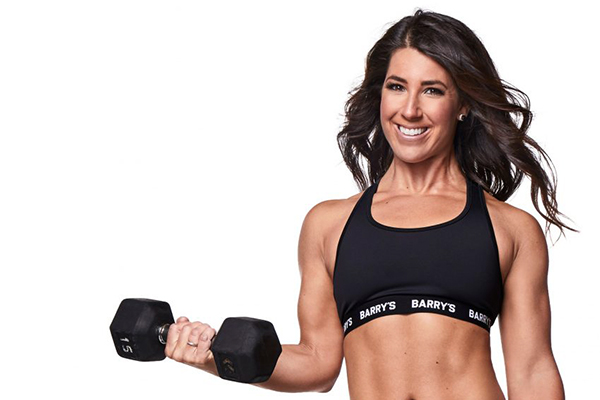
Emily Southworth – Barry’s Bootcamp

Sign up for Emily’s classes at Barry’s Bootcamp and follow her @emboslice.

What do you teach? What are you certified to teach?

I teach at Barry’s Bootcamp and my current certifications are Onnit Academy Foundations and Certified Strength and Conditioning Coach. Past certifications I’ve done include Mad Dogg Spin, PoundFIT and AFAA Group Exercise.

What was your certification/training route? What would you recommend to others (if different)?

My first fitness certification was Mad Dogg Spinning back in 2010. This allowed me to teach spin at gyms, and once I started teaching at Recycle Studio, I went through their in-house training program. I started doing personal training at Get In Shape For Women and also went through their in-house training program while studying for the NASM personal training exam. I got my Group Ex cert through AFAA in 2013 before starting to teach at Barry’s Bootcamp, and also went through Barry’s training. I got my Onnit cert and Mike Boyle’s Strength + Conditioning Coach certs in 2017.

I definitely prefer the hands-on, practical certifications vs. the purely online/test ones. I’m much more of a visual learner and found doing hands-on certifications to be really beneficial. Onnit and Mike Boyle’s were both weekend-long certs, but I got a ton out of them because we were physically going through what we were learning the whole time, vs. just reading it in a book. I’ve found the information I learned during those certs to be more applicable to the classes I teach vs. the larger certs like AFAA and NASM which are more generalized (i.e. during the AFAA cert, I had to answer questions about kickboxing).

Any other general advice for those pursing a group fitness career?

I didn’t go to school for exercise science, so it was important to me to learn as much as I could about how to safely and effectively train clients and teach classes. Just because you “love to workout” and are “in shape” doesn’t qualify you to be a trainer. You gotta back your shit up. I think social media really glamorizes the fitness scene, and it seems like everyone today is an “Instagram Fitness Model”.

I LOVE what I do and wouldn’t trade it for the world, but being a trainer isn’t for everyone. Once you become an instructor, exercising becomes your job, not just your hobby. So figure out what’s driving you to want to lead others, and understand that you don’t get to slack off—you can’t sleep through your alarm, you can’t let a bad mood get in the way of leading a class, you have to hustle to get people to show UP to your class, and you’re probably going to start off teaching some crappy time slots as you build up your crew (which doesn’t happen overnight!). Also, align yourself with a studio or gym or clients you believe in.

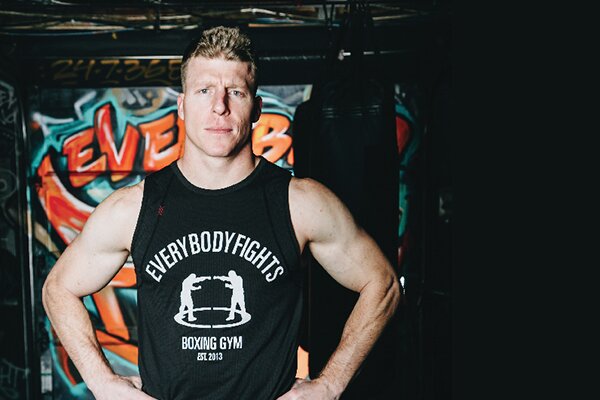
Reid Eichelberger – EverybodyFights

Sign up for Reid’s classes at EverybodyFights and follow him @adifferentbreid.


What do you teach? What are you certified to teach?

Right now, I am a full time EverybodyFights employee. I only teach at EBF and I teach somewhere between 12-20 classes a week. I also have management roles.

What was your certification/training route? What would you recommend to others (if different)?

I went to school for Sports Medicine with a concentration in Exercise Physiology. From there I got CSCS Certified (Certified Strength & Conditioning Specialist) through the National Strength & Conditioning Association. There are a lot of different certifications out there, but my recommendation to anyone looking to get into fitness would be to commit to one, like NSCA or NASM, dive in both feet, get certified as quickly as possible. Then get out and find group classes you like and network with other trainers.

Any other general advice for those pursing a group fitness career?

I’ll start with a disclaimer for those looking to be more full-time: Becoming a full-time Group Fitness Instructor is not for the faint of heart. It requires a true passion—not just for exercising, but for leading, motivating, and helping others. It is going to require burning your own candle at both ends, and you’ll need to be fully energized and engaged when most people with a “9-5” are off the clock. At times it is A LOT of sacrifice. But there are certainly rewards that come along with it.

ALWAYS continue learning (formally with more certs and informally). The more you learn the more valuable you are and the more passionate you will be.

TAKE CARE OF YOURSELF. Too many Fitness Instructors burn out because they are too busy helping other people that they forget to take care of themselves. Including yours truly!

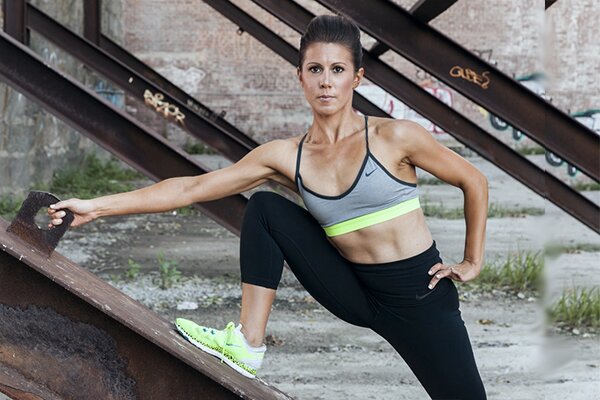
Jennifer Phelan – Equinox & North End Yoga

Sign up for Jen’s classes at Equinox, North End Yoga and jenniferphelan.com and follow her @jppilates1.

What do you teach? What are you certified to teach?

I currently teach mat Pilates, Pilates Fusion and Barre classes. I am nationally certified by Power Pilates. I’ve completed Equinox Barre trainings in Boston as well.

What was your certification/training route? What would you recommend to others (if different)?

While I attended college at Northeastern University I completed my first Beginner Mat Pilates certification through Power Pilates at a host studio in Boston. This certification gave me the opportunity to start teaching and really discover how much I loved it. About a year later I completed my Power Pilates Intermediate and Advanced mat certifications. A few years later I realized that teaching was the career path I wanted to pursue (instead of my 9-5 job in marketing at a law firm) so I invested in completing the Power Pilates Systems 1 Comprehensive Certification which included all of the Pilates apparatus/equipment. It took about a year to complete and resulted in me gaining the confidence I needed to quit my day job and become a full time Pilates instructor—which was the best decision I’ve ever made.

Things have changed in Boston since I’ve done my initial Pilates trainings. There are now actually several host studios you can choose from to take Core Mat 1, 2 and 3 at various times throughout the year—including at one of my favorite studios, North End Yoga. Core Mat 1 and 2 are two day trainings with a test out on the final day. I highly recommend this program to get things started on your teaching path. You don’t need any prior teaching experience to complete the courses.

I’m also excited to share that North End Yoga launched it’s very own NEY Barre Teacher Training Program in 2017. The training is led by Meagan Fitzgerald and I and we are  hosting our third one this October 12-14. During the training, students learn and study the fundamental components of an effective barre class. In addition to the barre training, Meagan and I aim to help students to each find their own teaching voice and spend quality time mentoring each participant while helping to identity and work towards their personal goals. Also during the course of the weekend, all trainees participate in an individual mini photo shoot with Lucie Wicker Photography, so that they leave the weekend ready to start teaching and armed with portfolio (or Instagram) photos as well! More info here.

Any other general advice for those pursing a group fitness career?

Your certification is the starting point, not the finish line. The real work begins after you get that piece of paper. Practice, practice and practice some more. Teach to everyone who will be your student—co-workers, friends, family, your dog or baby. The more you practice getting the words out, the more easily they will flow and you’ll be able to share what you learned with others effectively.

It’s also important to remember that just like any other job, you have to pay your dues and put in the time AND effort. You can’t expect to get certified and the next week be handed prime-time classes and to pack the room with students. The teachers who are the most successful are the ones who commit and build their classes from 2 or 3 students to 30, just by showing up, delivering an A+ experience and focusing on the people who show up, not worrying about the ones that don’t.

Take as many classes from instructors who inspire and motivate YOU. Think about how you feel during their classes and why you want to keep going back. This can help you as you craft your own class plans and envision how you want to make others feel when they are led by you. Don’t be afraid to reach out to your favorite teachers. If you’re considering doing a yoga teacher training why not reach out to your favorite yoga instructor and ask them some specific questions on their trainings and if they have any advice. They might not be able to meet you for coffee but they will likely email you back or hop on a call. Personally I love chatting with people about Pilates training. It feels so great to welcome new instructors to the club.

Aly Raymer – B/Spoke & Exhale

Sign up for Aly’s classes at B/Spoke, Exhale and alyraymer.com and follow her @aly_raymer.

What do you teach? What are you certified to teach?

I am currently an indoor cycling and yoga instructor. I took Mad Dogg, Schwinn and AFAA certifications for spin a very long time ago and have been a 200 RYT (registered yoga teacher) for about 8 years. I have also taken many workshops on anatomy, adjustments, meditation and sequencing to further my yoga teaching.

What was your certification/training route? What would you recommend to others (if different)?

I have been teaching indoor cycling since 2006 and boy has it evolved over time. I started when you had to have the above certifications to teach anywhere. Over time it has evolved and each studio has their own “style”and usually their own training. For larger gyms, you can still get by on the above certs, but everywhere I have taught, there is a learning period of that studio’s specific ride. So it depends on where you want to teach!
For both, first find a studio and teacher that you love. Take a ton of classes there, get to know the audience and their style. The most successful teachers are those who can assimilate into the community and build their following by being super comfortable and confident teaching in that space.
With yoga you are able to get certified literally anywhere in the world, so maybe it’s a goal to travel and at the same time get your 200-hour. But again, once you begin the journey to teaching, it is my best advice to go the studio of your choice and really dive into the community.

Any other general advice for those pursing a group fitness career?

Get ready to hustle. You will never have the same day twice. You must say yes to everything at first to get yourself out there and gain experience. Then once you have found your community, narrow it down and chose the studios/classes where you teach your best classes. Audition everywhere you can and try to teach at smaller, lesser known studios to get the experience you need. OR bigger franchises where they are not so specific about the style, just so that you can lead an exercise class.

Monique Gagnon-Magno – Lifetime Fitness & EverybodyFights

Sign up for Monique’s classes at Lifetime Fitness, EverybodyFights and Seaport Sweat and follow her @burpeestobubbly.

What do you teach? What are you certified to teach?

Currently, I’m teaching primarily my own format of cardio kickboxing, and some classes have a bootcamp element mixed in. I also teach BAGSXBEATS at EverybodyFights. I’m certified to teach Kickboxing, boxing classes, bootcamps, total body conditioning classes and classes with weights.

What was your certification/training route? What would you recommend to others (if different)?

I opted for the AFAA Group Exercise certification first as it seemed to be the most broad and the best way to be able to learn the necessary fundamentals of teaching, form, etc. and to teach at many gyms as the certification is widely known and accepted. A year later, I got my kickboxing certification through AFAA as well since I was finding a niche in that area of the fitness industry. Most recently, I’ve completed the BOXFIIT certification through EveryBodyFights. I recommend finding a nationally accredited certification so that you won’t have a problem teaching at various gyms (some gyms won’t accept the more “boutique” certifications as valid to teach at their location).

Any other general advice for those pursing a group fitness career?

Do what excites you, but realize things don’t happen over night! Teaching group exercise can be challenging at times, but it’s also SO rewarding, so be true to yourself and find ways to connect with the people in your classes. When you do that, you make the members feel wanted and important, and therefore they’re more likely to come back! I also suggest getting a strong foundation of knowledge around fitness so that you can ensure you’re teaching proper form and keeping your members safe. There are so many great resources on the internet and I’m constantly learning new tips that help me be a better instructor.

__________

Fellow instructors and trainers: Anything else to add? Aspiring instructors: Any questions? Leave them below in the comments!

xo Nicole