
Ok so you read my post about becoming a group fitness instructor. You decided this was the career for you, completed your certifications and landed a job. Now let’s talk about all the components of a great group fitness class. Not just a decent one, but one that stands out and keeps clients coming back week after week.
In writing this post, I’m certainly not claiming to be the best group fitness instructor out there—not by any means! I’m always striving to learn more and there is always room for improvement. I have days where I leave the studio and am like, Yasss honey, that was a killer class, go me! And then I have days when I’m totally off my game and just hope that no one in the class reviews me on ClassPass (lol).
But I’ve been at it for five years now, and beyond teaching, I’ve been a perpetual student and taker of group fitness classes. And last year, I was honored with the responsibility of doing observations for my fellow Btone instructors and giving feedback. Doing that forced me to think even more critically about what goes into a great group fitness class. So let’s talk about it! Fellow trainers and instructors, I’d love for you to weigh in in the comments section.
The Anatomy of a Great Group Fitness Class
What makes a class stand out will vary depending on the type of workout, but in general, a kickass class includes the following.
Verbal & Hands-On Form Cues and Corrections
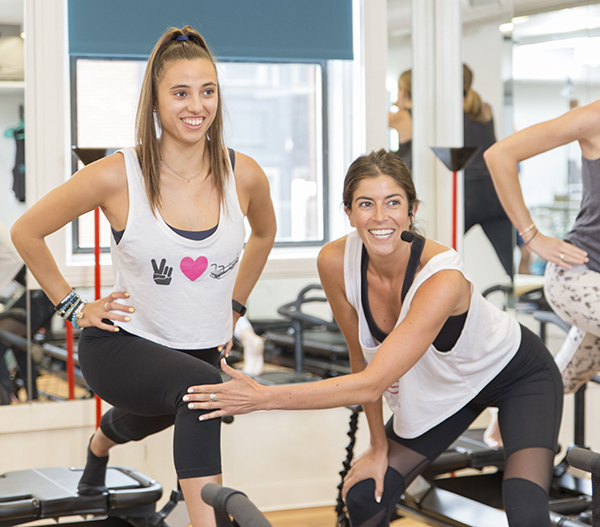
Photo credit: Nick Cosky for Btone Fitness
As an instructor, you have to care about proper form. Period. Not only is it a matter of safety, but the exercises are going to be more effective when done properly and clients will get a better workout. In a one-on-one training session, a single client has your total attention and you can really dial in with hands-on corrections, but in group fitness settings, it’s impossible to give that level of attention to every single person. Using a mix of verbal form cues that everyone can hear and individualized hands-on adjustments where needed will give everyone the direction they need.
When I first started out, I was totally uncomfortable with making hands-on adjustments, but I’ve found that 9 times out of 10, clients want the feedback and the correction. And you can always say something before class starts along the lines of, “I may make some hands-on adjustments throughout the workout—if you’re uncomfortable with that, just let me know.”
If you’re teaching a large class, you may only be able to make hands-on form corrections when you see something glaringly wrong. Verbal form cues, however, can be given to everyone throughout the workout. And it’s super satisfying to say an adjustment, “Slide your left hip forward an inch” and watch everyone self-adjust. Not everyone will have the body awareness to just go off verbal cues though, and that’s where you gotta get handsy.
Constantly explaining the proper way to perform an exercise can be exhausting (and extremely repetitive), so that’s why it’s important to take classes outside of your own and pay attention to the cues other instructors are using. I’m constantly picking up things from other trainers. Sometimes an analogy or way of cueing a position or muscle activation will just click—Yes! What a great way to describe what I want the class to do with their glutes!
One note on giving verbal corrections: Give general form advice over the mic (“Legs are active in this plank, squeeze your quads as if you’re lifting them off your knee caps”), but push the mic aside/turn it off when correcting an individual and instead walk up to them (“Mary, lift your hips up an inch and shift your shoulders back over the elbows”). Most people don’t appreciate being called out in class over the mic unless of course it’s to be given praise. 🙂
Using Clients’ Names
If you’re teaching a large class, it’d be damn near impossible to remember every single person’s name and use it throughout the workout. There’s no more than 14 people in a Btone class and I can’t even manage that lol. (Some instructors do and it’s beyond impressive!)
While I don’t think it’s necessary to give every person a shoutout, using a few names to give praise and motivate lends the class a more personal feel—even for those whose names you don’t know! I make a point to remember a name if it’s the client’s first class so that they feel welcomed and part of the studio family right away (“Great pace, Kim—perfect!”).
I also use the names of regulars to give praise, and if a student is advanced, I may refer to them for a demo (“Cara is in the move in the middle of the class if you need a visual!”). That’s particularly necessarily if I’m teaching a full class and don’t have a machine on which to demo. I only would draw attention to clients I know well to avoid making anyone uncomfortable, and it’s a nice way to acknowledge them for crushing their workouts with correct form week after week.
And I don’t know about you guys, but I find I push myself harder if the instructor knows me and my name. When I hear my name it’s like, “Ok, they see me, they know what I’m capable of, I better crush this.” Then again, I’m super competitive so that could just be me. 😉
Providing Individual Attention within the Group Setting
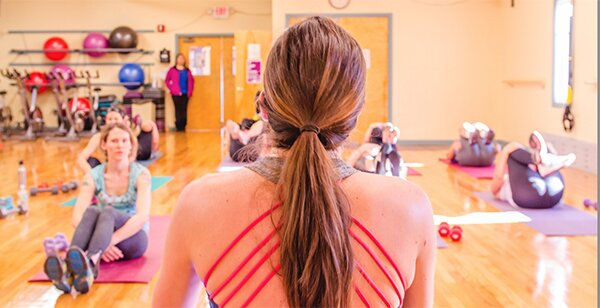
Photo credit: Megafood
This point draws on the previous two. In a Grade A class, you leave feeling like you got some individual attention within the group setting. Maybe it was a form adjustment, or maybe the instructor acknowledged you for absolutely crushing that final sprint.
Of course, the feasibility of providing every single client with some individual attention is going to depend on the class size, but there are other ways to make a client feel seen beyond using his/her name and making hands-on form adjustments. Eye contact, a smile and an encouraging nod can go a long way.
You can also give praise in larger groups: “Form looks great on this side of the room!,” “I see you, back row, crushing it!,” etc. This is a good way to acknowledge clients when you have a large class size and/or can’t remember names.
Class Plan Is Challenging/Effective for Most Advanced Person in Class, but Scalable for Everyone
A challenge that arises with leading a group workout versus personal training is that you need to accommodate a range of fitness levels and abilities within one class (unless it’s a specific Intro or Advanced class). When I’m observing the class I’m teaching, I look for two big things to determine if it was a successful routine:
- The most advanced clients were clearly pushed outside their comfort zone at least a couple times throughout the class.
- Beginner clients were never discouraged.
The key to achieving both is to GIVE MODIFICATION AND/OR ADVANCEMENT OPTIONS. One more time a little louder for the people in the back:
GIVE MODIFICATION AND/OR ADVANCEMENT OPTIONS
Depending on what you’re teaching, this might mean giving a range of weight/resistance options to use, a range of speeds, and/or explaining different variations of an exercise. But the bottom line is you have to give options to accommodate everyone’s fitness level.
For a class like Btone that flows one exercise right into the next, it can be challenging to convey all the necessarily information during the nonexistent transition time. So a good rule of thumb is if the class skews advanced, start them in the challenging move and then immediately explain how to modify. If the class skews beginner, start them in the easier version of the exercise and then give the option to advance.
Because of the time of day I teach, I have a lot of advanced clients who’ve been regulars for years in my class. So I plan a challenging routine, but am vigilant about giving modification options for every. single. exercise.
I don’t want newer clients to be discouraged by certain exercises or by the people around them doing crazy advanced versions, so I also like to verbally acknowledge the difficulty level and encourage the modifications. I explain how it’s more effective to do the modification properly for the full duration than to do the advanced version and have to stop every rep and sacrifice proper form.
Account for Injuries/Limitations
Before class, ask if anyone is working with any injuries or limitations that they’d like you to know about. This way you can anticipate parts of the workout in which you’ll want to offer specific modifications to accommodate them. You’ll also know that if they’re doing something other than what you’re instructing, it’s not because they don’t understand and need correction—it’s just because they’re adjusting as needed to an exercise that works for their body.
In a group class, you can’t cater the entire routine to one person’s injury, and for the most part, clients understand that. Especially if this is an ongoing issue, the client will probably know more about and be better equipped to adjust for their limitations than you. Encourage them to listen to their body and break from the class routine as needed, and offer alternative options when you can.
Working around injuries and limitations is great, but there may be incidents when it’s unsafe for a client to be working out at all, and that’s when you have to make a judgement call. Hopefully there’ll be a manager or studio owner to take that responsibility off your hands, but if you don’t feel comfortable having someone in class because you feel it’d be putting their safety at risk, you should nicely address that with them.
The “Why” Is Explained When Needed aka TEACH
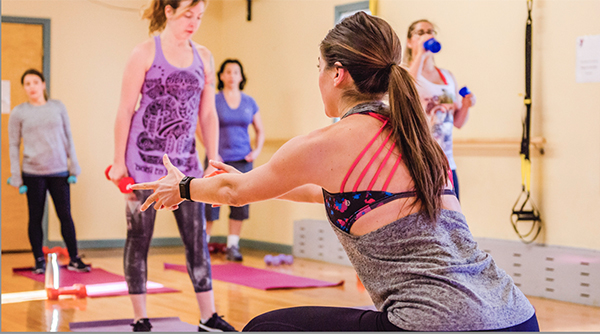
There are a lot of balls to juggle when leading a group fitness class, and there’s only so much time to talk out explanations. You’re certainly not going to be holding a lecture on anatomy and exercise science during the workout, but when you can, talk about the “why” behind what the class is doing—teach them something! Good opportunities to drop some knowledge:
When an exercise or sequence is particularly hard, easy or out of the norm, assure the class it’s with a purpose. Tell the class why you’re having them do what they’re doing. If you sequenced a particularly difficult combo of exercises, assure the class it’s purposefully hard.
“I know this move is really challenging when done after that chest press, because it’s targeting the same muscles. Our goal is to fully fatigue the pectoral muscles before moving on, so it should be difficult by the last 20 seconds.”
You’re explaining the “why” behind your choices and also reassuring the class that they’re in good, qualified hands, and that there’s a method to the madness. 😉
Talk about common form errors, especially if you notice several clients making them. And you can take it a step beyond listing corrections (“Lift your left hip up an inch, lean forward with the torso”) and explain what those corrections do.
“Lift your left hip up an inch so that it’s level with the right. This will prevent you from transferring weight into the back foot, and will keep the work in the target leg. Lean forward with the torso. This will relieve pressure from the back hip flexor if you have tight hips, and increase the weight load on your front leg, helping us reach muscle fatigue within the interval.”
Do a deep dive into a particular exercise, especially if the class will be spending a significant amount of time on it. What muscles are being targeted? Where should clients be feeling it? Why is this an effective exercise? Why is it being done at this point in the routine?
Relate it back to real-life, day-to-day scenarios. The goal of working out shouldn’t just be to get really good at a particular 45-minute class. It should be to improve your quality of living and day-to-day function when you’re out of the fitness studio and living your life. In particular, I love when yoga instructors do this (“This is a great stretch if you do a lot of XYZ or have tight ABC or suffer from EFG”), but it applies to all modalities.
“We’re going to do a lot of chest opening stretches and targeted back exercises today. If you spend a lot of time hunched over a computer or your phone—as most of us do!—this is important work to counter that movement pattern.”
Class Is Sequenced Effectively
I could do an entire separate post on sequencing classes (maybe I will?), but for today I’ll keep it on the general side. When planning a class, you don’t just think about an exercise in isolation. You have to think about it in context of what exercises are being preformed before and after it. Some things to consider when sequencing:
- Smooth transitions – Are clients able to move from one exercise to the next in the given rest/transition time? Think about set-up and equipment needed.
- Exercise pairings – In part, the effectiveness and difficulty level of an exercise depends on what it’s paired with and when in the sequence it occurs. For example, holding a squat at the start of a workout when you’re fresh might not feel very challenging. Holding a squat after performing squat jumps and glute bridges will feel a lot more challenging.
- Target muscle group – What muscle group is being targeted with each exercise? Is the goal of the workout to focus on specific muscle groups or to get a full-body burn with compound exercises?
- Common limitations/complaints – Take into account limiting factors when sequencing a workout. For example, wrist discomfort is common with a lot of plank work. Instead of doing five minutes straight of plank/push-up-based exercises in a row, mix in some forearm planks or core moves on your back to relieve the shoulders and wrists.
Read the Class, Make Adjustments on the Fly as Needed
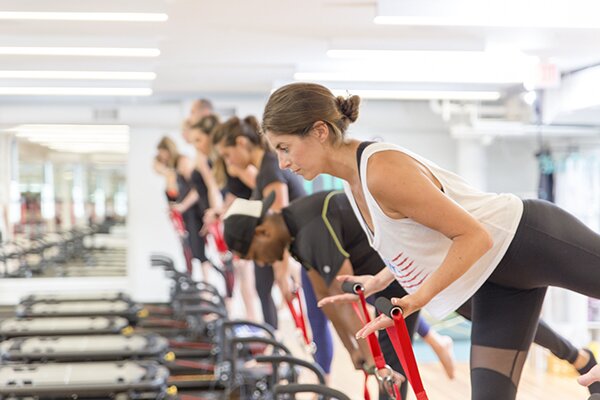
In the words of Outkast: You can plan a pretty picnic but you can’t predict the weather.
I know some veteran instructors who don’t class plan at all before teaching, and you very well might get to that point yourself, but in general it’s important to have a plan. Equally as important is being able to adjust that plan on the fly in response to the class.
Pay attention to the room as you go. Are they following along? Do they look discouraged? Are they breezing through class? Is everyone struggling? Are your cues sticking? Are they doing the move properly?
If, for example, four minutes into class no one is following along and everyone is modifying or looking at you blankly, you probably planned a class that’s too advanced for that particular group. If you continue to stick to the original plan, it’s going to be 45 minutes of torture (for the clients and for YOU). We tend to equate “hard” with “effective,” but that’s not always the case. If something is so hard that clients can’t do it properly or for long enough, it’s actually ineffective. The opposite holds true as well. If clients are breezing through the routine or looking bored, give options to advance the exercises and try throwing in some harder variations.
If the idea of totally free-styling a workout in response to clients fills you with fear, don’t worry. There’s no need to toss out the entire plan. If you need to make it easier, just replace every couple exercises with an easier version so that it isn’t back-to-back-to-back hard moves. If you need to make things harder, do the opposite. Or, stick to the original exercises but add in extra weight, holds, more speed, pulses, etc. (depending on what you’re teaching).
To give an example for Btone, let’s say I have three plank-based exercises in a row planned for my advanced 6AM group. I then start teaching the same class plan to a different group later in the day and notice it’s going to be too much. Instead of throwing out the whole core series, I’ll just replace that second plank move with the kneeling move. So instead of plank 1, plank 2, plank 3; it’s plank 1, kneeling 1, plank 3. That one little change instantly makes the sequence more approachable without having to toss out the whole plan.
You can also help set yourself up for success by checking class rosters before you plan the class. Are there a lot of newbies? Is it a roster full of regulars? Plan accordingly.
Music
Fitness classes and music are inextricably linked. And it’s not always enough to play the songs you currently like. Your playlist should reflect the type of workout you teach and should keep your audience in mind.
In workouts like spin or dance cardio, the music is going to play a bigger role than in some other classes because you’re literally choreographing the routine to it. And with workouts like cardio kickboxing and some types of barre, you move to the beat of the music, so it’s necessary to use a playlist with a steady BPM (beats per minute). I’ve used Steady130‘s mixes in the past that are a good mix of current popular songs and remixes set to a fixed bpm. Lately I haven’t been loving them though so I’ve just been making my own.
Whether the class literally depends on the music or it’s just to set the mood and energy in the room, you should put some thought into curating your playlists. To make the task easier (finding music can turn into a full-time job!), I follow fellow fitness instructors in Spotify and pull from their recent playlists. Helps a ton in finding good music!
Energy & Presence
Even if it’s not spin or another class in which you need to do the actual workout with your clients, teaching requires a massive energy expenditure. (Ok maybe not a restorative yoga class, but you get the point.) From the time the first client steps into the room until the last person leaves, you have to be ON.
It’s why burnout is a very real and frequent thing in the fitness industry. Personally, it’s why I only now teach one day a week. I just couldn’t sustain the feeling of utter exhaustion I was permanently in when teaching 20+ classes a week. And I don’t even have to do the workout when I teach at Btone! It’s more than being physically “on”—you’re talking constantly, managing the room, correcting form, thinking four steps ahead, adjusting to meet the needs of clients. It’s a lot.
On the positive side though, I find it forces you to be completely, 100% present. All the other things going on in your life and the thoughts fluttering through your mind are left at the door, and for 45 minutes you are completely dialed in to teaching.
At least you should be. When you’re having a bad day, it can be hard to put on a smile and inject positivity into the room during class. And ALL instructors will have off days when it’s just not happening. But as best you can, for those 45 or 60 minutes, you need to leave your baggage at the door, suck it up, and put on a smile.
One of my favorite messages that Rich Roll always repeats on his podcast is that “mood follows action.” And it’s so true! If I’m having a bad day leading up to a class but I push it aside and fake a good attitude for the duration of the workout, I find that when class ends I actually am feeling happier and more positive.
There’ll be classes where the energy in the room is awesome right from the start and all you have to do is ride the wave of what your clients are already brining. Then there’ll be other days where YOU have to be the one to dial up the energy for the class. In that way teaching is a lot like performing.
__________
As long as this post is, it could have been even longer. After five+ years in the group fitness industry, I swear I could talk about this stuff all day!
For you, what makes a group fitness class stand out? Leave a comment with anything you’d add to the post or areas I may have overlooked! 🙂
xo Nicole






 RSS - Posts
Hi Nicole!
I loved this post. Maybe it’s just me but I love when instructors make the class about pushing through the hard times and relating fitness to life and it’s tough times. It makes me feel like a warrior. I love when instructors share personal tidbits about themselves during class too, it makes it feel personal (like they like fried chicken or stayed up late watching a show). I don’t really like when class music and moves or repeated from week to week. I would love to take a class with you something! I’m at Equinox and am not sure if I’ll stay!
Meghan
Wow! These are great tips. I’ll def use these. Thanks for sharing this extensive post.
I love this post and your content about being in group fitness — as someone just starting to teach yoga + fitness full-time it’s super helpful!
It’s really amazing article about the group fitness. Thanks for sharing this good fitness tips