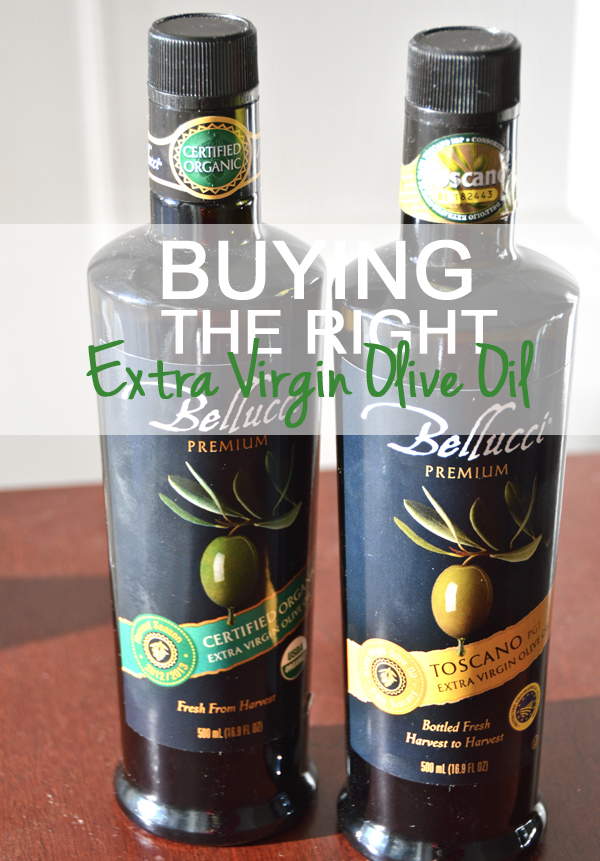
 As I mentioned in my last post, I was invited to a cooking class at the Seaport Hotel’s Action Kitchen yesterday. It was such a fun way to spend an afternoon, and after accidently spilling tuna radicchio salad all over the floor, I’d say I easily won the title of Cooking Class MVP. Oops…
Supported by Italy and the European Union, the Flavor Your Life class set out to educate us on quality Italian extra virgin olive oil. The majority of what we buy at the supermarket here in America is not, in fact, EVOO (yikes!). If we aren’t careful to read labels, we most likely are buying bottom-of-the-barrel olive pomace diluted with other vegetable oils from various countries. There was a recent article in the New York Times about this very issue (it’s a quick, illustrated slideshow that’s worth a look). My guess is that with this dilution of the olive oil industry and the current rise in popularity of other cooking oils, Italy (the largest exporter of evoo) has a vested interest in promoting these types of classes. While my use of coconut oil has definitely increased in the past year, I still use extra virgin olive oil all the time, so was excited to learn more.

Before we got to the actual cooking part of the class, olive oil expert Bill Marsano gave us the scoop on everything you could ever want to know about olive oil. It’s useful info when shopping for evoo, so I wanted to share it with you all today.
Read the Label Carefully—Look for “Made in Italy”/ ”Made in [Region of Italy]”
This can be tricky. As little as 2% of the olive oil needs to come from Italy for it to be legal for bottlers to put “Product of Italy” or “Produced in Italy” on the label. What you ideally want to buy is an olive oil that has been pressed and bottled on the same farm (or at least in the same region) that grew the olives. Among other reasons, this is because olives should be pressed within 24 hours of being harvested.
Look for the words “Made in” and the flag of Italy—this is an official label that ensures your olive oil really was grown and bottled in Italy; not imported from other countries and simply packaged there. The cooking class was focused on Italian extra virgin olive oil (Italy is the biggest exporter of it), but I should add that perfectly delicious and high-quality olive oils come from other countries as well. What you want to avoid is olive oils that were grown in several different countries, shipped to another for pressing, then diluted with low-quality vegetable oils, and then finally bottled and exported to your local grocery store.
Out of curiosity, I looked at the evoo I had in my kitchen when I got home from the cooking class. Here’s what was the label: “Packed in Italy with select extra virgin olive oils from Italy, Spain, Greece & Tunisia.” Womp womp wommmmp. While blends of different olives aren’t necessarily a bad thing, this is exactly the red flag EVOO Guru Bill had warned us about.
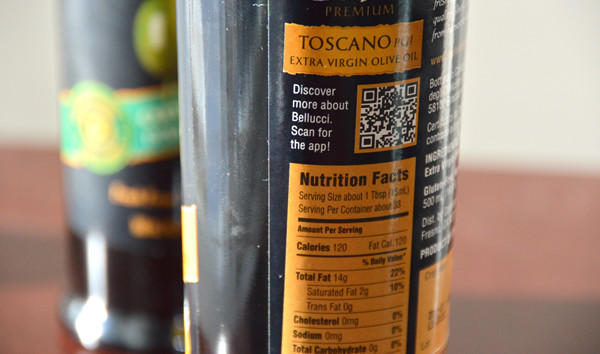
The Bellucci extra virgin olive oil that we used and were given in class actually had a QR code right on the bottle so that you could see precisely where it came from and track it back to the olive farm. Love that!
First Cold Press Is Best
You get more oil from the olives if heat is applied, but you get a better quality with cold pressing. “First” means that it’s from the initial press of the olives. After that, the remnants will be pressed again to eek out any lingering oil, but these subsequent presses produce a lower quality of oil.
Avoid Pomace
After the first couple presses, the sludge/remnant matter is called pomace. There’s still a little bit of oil left in this, but it’s of the lowest quality. If your bottle of olive oil says “pomace” on it, you’re consuming bottom of the barrel (literally).
Store in a Dark Place
When overexposed to light, your olive oil will go bad. That’s why you often see evoo sold in dark bottles.
Other Fun EVOO Facts
I had no idea that olive oil had the same type of fan base as wine. Bill could have talked passionately about EVOO all day—all week even.
- Color Doesn’t Matter: The color of an olive oil isn’t indicative of its quality. During tastings, EVOO experts will actually sip from black cups so as not to be influenced by appearance.
- Organic Isn’t Necessarily Important: Say whaaaat. I was totally surprised when Bill said this. There’s a saying in Italy about olive trees that essentially translates to “treat me poorly and I will make you rich.” Apparently, the less you fuss with olive oil trees, the better the crop and higher the yield. Bill rationalized that there isn’t as great an incentive to use pesticides and chemicals in growing olives because they tend to grow better without interference. In my opinion, organic is never a bad choice to make, but I think the point here is that while it’s vital to buy certain foods organic because they can be highly contaminated (check out the list HERE), olive oil is a lot safer to buy inorganic.
We did a tasting during class of vegetable oil, rancid extra virgin olive oil and quality extra virgin olive oil, and I can confidently say that I have been cooking with rancid evoo for, like, ever. Damnit. EVOO that was harvested, cold-pressed and bottled in the same place is drastically better in taste and texture. Going forward, I’m definitely going to shell out the extra couple dollars for quality evoo at the grocery store!

Whoa that was a long post! Hopefully you learned something from it though. 🙂 To avoid it getting any lengthier, I’m going to hold off on sharing the recipes we made in class for another day.
Happy Friday, everyone—enjoy your weekend!

P.S. Just want to clarify that the class wasn’t promoting that particular brand of EVOO pictured in the post–more so just any and all brands that provide quality product and offer transparency about where the olives come from.


 Hey there! I'm Nicole, a group fitness instructor, healthy lifestyle blogger (you probably figured that one out by now) and Certified Personal Trainer living in Boston, MA.


